
Pakistan Claims It Hit Two Indian Airbases; The Catch — They Don’t Exist
Pakistan claims it hit two Indian airbases, but fact-checks reveal the alleged military targets do not even exist.

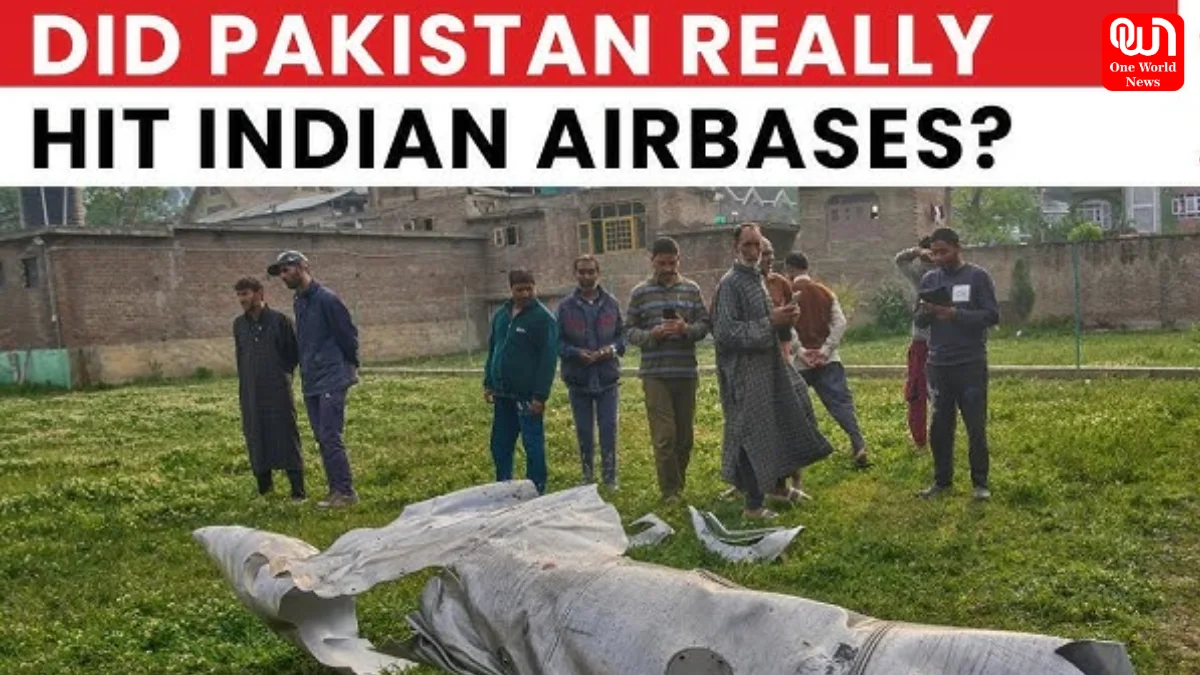
Pakistan Claims It Hit Two Indian Airbases, But Fact-Check Reveals the Locations Don’t Even Exist
Pakistan has once again found itself at the center of controversy after claims surfaced that its military successfully targeted two Indian airbases during recent tensions with India. However, the story quickly began to unravel after analysts and fact-checkers pointed out a major issue — the alleged Indian airbases named by Pakistani officials do not actually exist.
The claims reportedly emerged during an interview involving a Pakistani military officer associated with the Fateh-1 missile operations. According to the statement, Pakistan had allegedly struck “Rajouri Airbase” and “Mamun Airbase” in India. But military experts and defense observers soon clarified that neither of these locations is an operational Indian Air Force base.
This development has sparked fresh debate over misinformation, propaganda, and psychological warfare in South Asia’s already tense geopolitical environment.
What Did Pakistan Claim?
The controversy started when Pakistani officials claimed that missile strikes had successfully targeted two Indian military airbases. The names mentioned were Rajouri Airbase and Mamun Airbase. According to the narrative, the strikes were carried out using Fateh-1 missile systems.
However, defense analysts quickly verified that Rajouri is actually a district in Jammu and Kashmir and does not host any Indian Air Force airbase. Similarly, Mamun is known as a military cantonment area near Pathankot in Punjab, not an airbase.
The revelation weakened the credibility of Pakistan’s claims and triggered widespread reactions across media and social platforms.
Read more: Political Roundup: Finance Ministry’s New Cost-Control Advisory Sparks Nationwide Debate
Why the Claims Raised Questions
Military experts often rely on satellite imagery, official defense records, and geographic databases to verify claims related to military operations. In this case, no operational Indian airbases exist under the names mentioned by Pakistani officials.
The absence of supporting evidence, such as satellite images or independent verification, further added to skepticism. Several observers described the claims as another example of information warfare aimed at influencing public perception during periods of heightened tensions between India and Pakistan.
India has not officially acknowledged any damage linked to the claims, and no verified reports have emerged confirming attacks on Indian air installations.
The Role of Propaganda in India-Pakistan Tensions
India and Pakistan have a long history of military and political tensions, especially concerning Kashmir and cross-border security issues. Alongside conventional military posturing, both nations have also witnessed intense digital propaganda and misinformation campaigns over the years.
False or exaggerated military claims are not new in modern conflicts. Experts say such narratives are often designed to boost domestic morale, shape international opinion, or create psychological pressure on the opposing side.
Previous incidents involving fake visuals, manipulated satellite images, and misleading claims have also surfaced during India-Pakistan confrontations.
How Social Media Amplified the Story
Social media platforms played a major role in spreading the claims rapidly. Multiple pro-Pakistan accounts shared videos and graphics suggesting successful strikes on Indian military infrastructure. However, many of these posts lacked credible evidence or official verification.
Fact-checkers and defense researchers quickly countered the narrative by identifying inconsistencies in the claims. Discussions on online forums and defense communities also highlighted how the alleged airbases did not exist in official Indian military records.
The incident once again demonstrated how quickly unverified military information can spread online during geopolitical conflicts.
Read more: Woman ‘Falls’ to Death in Greater Noida, Husband Arrested
India’s Response and Strategic Silence
India has largely maintained strategic silence regarding the claims. Defense experts believe that India prefers not to respond publicly to narratives considered baseless or lacking evidence.
Indian authorities have previously dismissed similar allegations related to attacks on military infrastructure and air defense systems. Government fact-checking agencies have also repeatedly warned citizens against sharing unverified wartime information online.
The latest controversy further highlights the growing importance of fact-checking in modern information warfare.
We’re now on WhatsApp. Click to join.
Like this post?
Register at One World News to never miss out on videos, celeb interviews, and best reads.