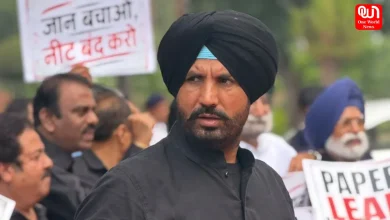
SC Begins Hearing on TMC’s Plea: Big Setback as Supreme Court Backs EC on Central Govt Counting Staff
SC begins hearing on TMC’s plea but backs EC on central govt counting staff, saying it cannot be termed illegal. Major setback for TMC.

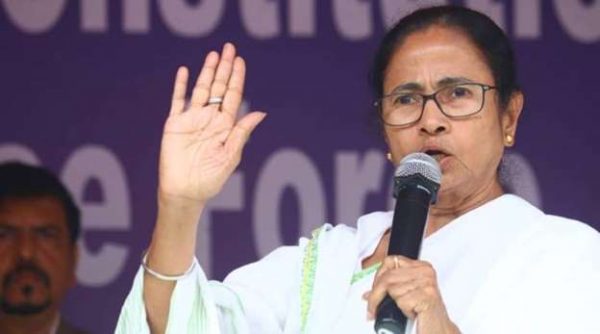
SC Begins Hearing on TMC’s Plea — Supreme Court Says ‘We Can’t Call It Illegal’, Backs Election Commission on Central Govt Counting Staff
The recent developments in the ongoing political and legal tussle between the Trinamool Congress (TMC) and the Election Commission of India (EC) have drawn national attention. The phrase “We can’t call it illegal” from the Supreme Court has effectively tilted the balance in favor of the EC, marking a significant setback for TMC.
SC Begins Hearing on TMC’s Plea
The controversy began when TMC approached the Supreme Court challenging the EC’s directive regarding the deployment of central government staff in the vote counting process for the West Bengal Assembly elections. The party raised concerns over fairness and neutrality, arguing that the exclusion of state government staff could compromise transparency.
The Supreme Court constituted a special bench to hear the plea, indicating the urgency and political sensitivity of the matter.
What Was the Core Issue?
At the heart of the dispute was a directive that mandated at least one official at each counting table—either a supervisor or assistant—be drawn from central government departments or public sector units. TMC argued that this deviated from established norms and potentially created an imbalance in the counting process.
However, the EC maintained that the system ensured fairness through a mix of central and state officials and that all procedures were being followed strictly as per guidelines.
Supreme Court’s Stand: No Illegality Found
In a decisive observation, the Supreme Court clarified that the EC’s decision could not be termed illegal. The bench emphasized that election staff, regardless of whether they are from the Centre or the state, function under the authority of the Election Commission.
The court further noted that government officials cannot be presumed to have political allegiance and are expected to perform their duties impartially. This observation significantly weakened TMC’s argument about potential bias.
read more: Gold and Silver Prices Rise Today in Indian and Global Markets
Ultimately, the court declined to pass any additional orders, stating that the EC’s assurance of implementing its circular in “letter and spirit” was sufficient.
Why This Is a Setback for TMC
This ruling is being widely viewed as a legal and political setback for TMC for several reasons:
- Judicial Endorsement of EC Authority: The court reinforced the EC’s autonomy in conducting elections, limiting the scope for political interference.
- Rejection of Bias Claims: By stating that central staff deployment is not inherently problematic, the court dismissed TMC’s concerns about partiality.
- No Immediate Relief: TMC sought urgent intervention, but the court’s refusal to issue directions leaves the EC’s plan intact.
Political reactions were swift, with opposition parties calling the ruling a validation of constitutional processes and questioning TMC’s repeated legal challenges.
The EC’s Defense: Balanced Mechanism
During the hearing, the EC clarified that the counting process involves multiple layers of checks and balances:
- Random selection of staff
- Presence of micro-observers
- CCTV monitoring
- Counting agents from political parties
These safeguards, according to the EC, make it nearly impossible for manipulation to occur. The court appeared convinced by this argument, further strengthening the EC’s position.
Read more: Jabalpur Boat Tragedy: Woman Found Clutching 4-Year-Old Son in Heartbreaking Final Moments
Larger Implications for Electoral Transparency
The Supreme Court’s stance has broader implications beyond just this case. It reinforces the principle that:
- The Election Commission has wide discretion in managing electoral processes
- Administrative decisions should not be easily challenged without strong evidence
- Institutional trust remains central to democratic functioning
For future elections, this judgment may act as a precedent, discouraging similar challenges unless backed by concrete proof.
Political Context and Rising Tensions
The case comes amid heightened political tensions in West Bengal, with allegations ranging from EVM tampering to administrative bias. TMC has been vocal about its concerns, even labeling certain developments as threats to democracy.
However, the judiciary’s consistent backing of procedural integrity suggests that such claims need stronger substantiation to hold ground in court.
Conclusion
The Supreme Court’s observation that “we can’t call it illegal” has effectively closed the door on TMC’s challenge—at least for now. By backing the Election Commission and refusing to intervene, the court has reaffirmed the institutional framework governing elections in India.
While political debates may continue, the legal clarity provided by the apex court strengthens the credibility of the electoral process. For TMC, this marks a significant hurdle, but for the EC, it is a reaffirmation of authority and trust.
As counting day approaches, all eyes will now be on how the process unfolds on the ground—and whether the assurances given in court translate into seamless execution.
We’re now on WhatsApp. Click to join.
Like this post?
Register at One World News to never miss out on videos, celeb interviews, and best reads.