Loud, Queer & Unapologetic
Ankur on identity, Instagram, and why safety comes before visibility

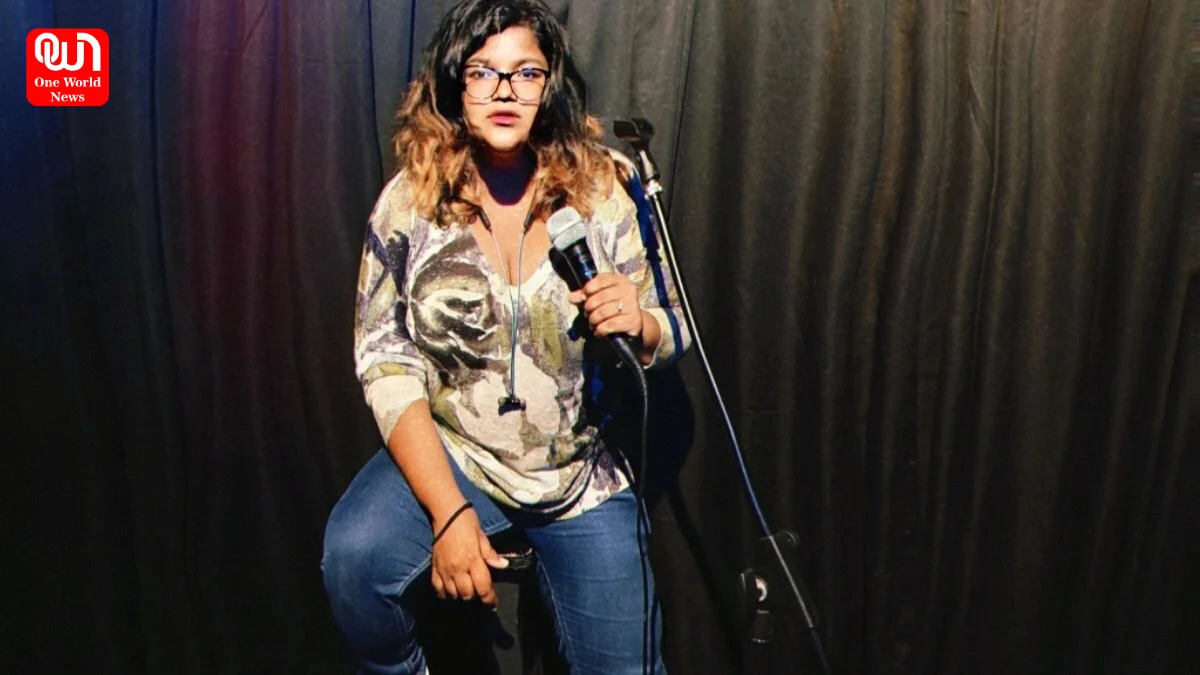
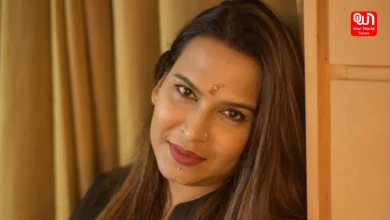
Ankur is a standup comedian and human rights activist from Beed, Maharashtra. A queer
Dalit woman with a background spanning theatre, music, field research and social
activism, she channels all of it, the joy and the fight, into her comedy. In 2022, she
co-founded Blue Material, India’s first and only Dalit-led comedy collective. In 2025, she
created and toured with Da-Lit Queer, India’s first DBA (Dalit, Bahujan, Adivasi) queer
fest. She has performed on stages, hosted panels on women’s safety and sexual wellness,
and facilitated workshops on some of the most pressing social issues of our time. We spoke
to her about what the internet means for queer people in India: the community it builds, the
violence it enables, and why she thinks safety will always matter more than visibility.
Do you think social media has made it easier for LGBTQI+ people to express themselves?
Yes, I feel like social media has given the queer community a space to express themselves,
and that’s a good thing. You find your people, you find your community online, especially for
people who don’t have that support or love in their offline life. I am openly queer online and
offline because my parents are human rights activists. They support me, my friends support
me. But for a lot of kids today, that isn’t the case.
I would also say: don’t get influenced by openly queer artists online and then feel pressure to
open yourself up the same way. Safety is more important. Take your time. You don’t have to
come out because it looks like a trend. Try to find people in your offline world first, people
who understand you and support you. But yes, for a lot of my friends who are closeted, we
found each other online. That’s the plus point. You find your people, your community, people
who guide you and help you.
View this post on Instagram
Is it easier to be your true self online than in real life?
Yes, it is easier to be open about your sexuality online than offline. Being openly queer, a lot
of people DM me. They’re trying to figure things out, just like I once was. I knew I wasn’t
straight, I knew I wasn’t into men that much, but I had no idea who I really was. So many
people message me saying: hey, I feel attracted to a certain person or gender, I love dressing
a certain way, I’m still trying to figure it all out.
Social media gives you that space. You find your people, you get the help, the love, the
support, more than you might offline. A lot of young people today are scared to talk to
someone in person, scared to be judged. Online, it’s different. You can see someone who is
openly queer and just think, I want to DM them. I want to find my community. And you can.
Do LGBTQI+ people feel safe on platforms like Instagram today?
It depends. I’ve had a lot of experience with finding a community. Many of my friends who are closeted found really good friends online, people who are more than family now. But there are also deeply negative things happening.
A couple of times I’ve found out that my friends were being blackmailed, getting rape threats
and death threats. A bad person can hide behind a fake profile and threaten you, and that
person could be your classmate. I remember a friend who was getting rape threats from their
classmate because that person, through the fake account, knew every detail: which school
they went to, their routine, their tuition. My friend had no idea who it was because it was all
behind a fake profile. That kind of situation is very easy to create on Instagram, and it
happens a lot. But at the same time, you also find people who are there for you, who support
you, who love you. It’s both. It’s good and bad, unfortunately. But we are here to help.
What kind of hate or negativity do queer people still face online?
A lot of hate is always there. When I went viral for a YouTube show, I was the only queer
person in the lineup, and I introduced myself openly. Around 95% of the comments on that
video were hate. The video had somewhere between 12 and 15 million views, and the creator
eventually had to take it down because of the sheer volume of hate. Death threats, rape
threats, homophobia, and then the classic: these are all new terms, queer and LGBT are new
words. And I look at those same people and their bios say hashtag foodie, hashtag traveller.
They have the audacity.
I had been scared to post my videos publicly, honestly. I thought I wouldn’t be able to handle
the hate, that I wasn’t mentally ready. And then suddenly I went viral and there was all this
hate, but somehow I was having fun. My followers were there, and even the people who
followed just to hate me, I thought: okay, at least hit the follow button. It was thousands of
people at once, so overwhelming that I couldn’t focus on a single hate comment because they
just kept coming. So I ended up enjoying the attention rather than drowning in it. That’s just
me, and I know it isn’t like that for everyone. Other people do get deeply affected, and I was
worried I would too. But it didn’t happen for me, and that actually made me feel powerful.
Okay, turns out I don’t give a shit, so I should show up more, be more visible. And that’s
what I decided to do.
Read More: Transgender Rights Amendment Bill 2026: Key Changes and National Debate Explained
How helpful is social media for someone who is still figuring out their identity?
It was very helpful for me. Even though my parents were supportive when I came to them and said I didn’t think I liked men much but wasn’t sure, and they said let’s figure it out together, they also weren’t fully aware of the queer community, what all the terms meant, what the experience was really like. So all of us were learning together. Social media became a huge part of that.
For a couple of months, I thought I was homosexual. Then I realised I was attracted to men too, so I thought maybe I’m bisexual. Then for a while I thought maybe I’m asexual. And finally I came across pansexuality, and it just clicked. It felt like a puzzle piece falling into place. That’s me. There’s no clear instruction manual for figuring out who you are. It’s just something inside you that clicks.
There were also smaller things. At queer events, I used to feel like I didn’t belong. I don’t look
queer, I don’t dress like them, I don’t have the same interests. All my queer friends loved
Lady Gaga and Taylor Swift. I like Hariharan. So I couldn’t even follow the conversations and
I thought, maybe I’m forcing this on myself. Later, when I started talking to people in the community, I described what I was feeling and they said: that’s imposter syndrome, it’s completely normal, all of us feel that. That’s how I even learned the term. The big and small things you figure out, you learn from the community, and you meet that community online first.
Are brands truly supporting LGBTQI+ voices or just doing it for
attention?
There are very few brands who genuinely want to support the queer community. Some understand it as good business: they want to reach a queer audience, and they go for it honestly. But there is a large group of brands who just pretend.
My manager has been reaching out to a lot of people, and this is what happens. They say: we support queerness, we support LGBT, and we don’t believe Pride Month is the only time to work with queer artists. So they say no to Pride Month collaborations to avoid looking like they’re doing it for the optics. But then for the rest of the year, they never call. They never reach out. They don’t want us around. They are just being diplomatic. They know how to not sound homophobic while being homophobic. That’s also a real thing. Very few brands are proudly, genuinely there for the queer community. A very large number simply don’t want to be associated with us at all.
How can we make social media a safer space for LGBTQI+ people?
We need to be more vocal on our own platforms about who we are and what we stand for. Being visible is itself a message. I am just openly queer, just existing online. But that sends a signal to someone who needs it: this person is safe, I can reach out, I can message them.
Being visually and vocally out there, saying this is a safe space, you are welcome here, the doors are always open, that kind of presence needs to come from those of us who are already out there online trying to build something.
Because a lot of queer kids don’t have family support. Some are genuinely in danger at home. They try to find safety by talking to strangers online, and sometimes that stranger seems accepting, seems warm, seems like they understand. But then it turns out they are predatory. Blackmail, extortion, physical and mental threats. There is always a positive and a negative. What we can do is be as clear and loud as possible about who we are and what we stand for, so that the people who need a safe space can actually find it.
What advice would you give to someone who wants to come out online?
Your safety should be the first and most important priority. Look around you, at your family, your friends, your relatives. Are they safe? Your social media is the world. The world will see you. It is okay to take your time. If something goes wrong, do you have a way out? There should always be a plan B. Always keep your safety first.
And please don’t get influenced by people who are openly queer online. They are in a safe place. They have knowledge, experience, and support systems. They know where to go if something goes wrong. That is why they are visible. Gain that knowledge first, about safety, about where to seek help, about how to handle different situations. Come out when you are ready, when you want to, not because you saw someone online and it looked fun. You will get
there. But if this is not the time, don’t do it. It’s fine. I came out very late in my life. So many people around me did too. People just need to know their own surroundings, take care of their own safety, and take their time.
What positive changes have you seen for the LGBTQI+ community because of social media?
It has become so much easier to connect. There are pages online for every city: LGBT Pune, LGBT Mumbai, LGBT Bangalore, LGBT Nashik. Every city has its own queer community page. Finding your people from your own city has become genuinely possible now.
And beyond just community, it enables real, practical support. If someone comes to me and says they need legal advice about a situation, even if I don’t have the answer, I know someone who does. I can connect those two people online. That happens because of social media. If someone needs shelter, needs protection, and tells me what city they’re in, even sitting in my small town at home, I can connect them to the people who can help them there. All of that happens because of social media.
What are the biggest challenges LGBTQI+ people face online today?
I used to get a lot of hate comments and very nasty DMs. What I started doing was screenshotting them and posting them publicly, tagging the person. A lot of my followers also started messaging the hater’s friends and family, saying: look at what this person is doing online. That stopped it. People who follow me, even the haters, realised: if we send something to her, she will post it and she will tag us.
But I also know that not everyone can do that. Not everyone has the platform, the mental capacity, or the physical safety to publicly call out their harassers. Everyone is in a different situation. And even with all of that, fake accounts are still there. The shield is always there for bad people. That remains the biggest challenge: the ease with which someone can hide and cause real harm to someone who might have nowhere else to turn.
In Closing
At the end of the day, I just want queer kids, especially queer Dalit, Bahujan, Adivasi kids, to know that their joy is not a luxury. It is resistance. Every time I step on stage and make a room full of people laugh, I am doing something my community was never supposed to do: take up space, make noise, and feel good about it. Social media gave me the first window into that world, and I want to make sure that window stays open for the next person who needs it. Just please, be safe. Know your surroundings. And when you are ready, be as loud as you possibly can.
When we wrapped up the conversation, Ankur was already moving on to the next thing: a workshop, a show, a call from someone who needed help finding their footing. That is just how she operates. There is no separation between the work and the person. The comedy is the activism. The activism is the comedy. And somewhere in between, she is also just a woman from Beed who figured herself out on the internet, one label at a time, one DM at a time.
In a country where queer visibility still comes with a cost, online and off, Ankur is choosing to be seen anyway. Not because it is easy. But because somewhere, a queer kid from a small town is scrolling, looking for proof that there is a place for them too. She wants to be that proof.
One World News
Follow Ankur on Instagram. Watch out for the next Da-Lit Queer tour.
We’re now on WhatsApp. Click to join.
Like this post?
Register at One World News to never miss out on videos, celeb interviews, and best reads.