
D Vance Defends H-1B Restrictions Amid Visa Turmoil for Indians
D Vance defends H-1B restrictions as moral policy, while Indian professionals face visa delays, uncertainty, and stricter US scrutiny.

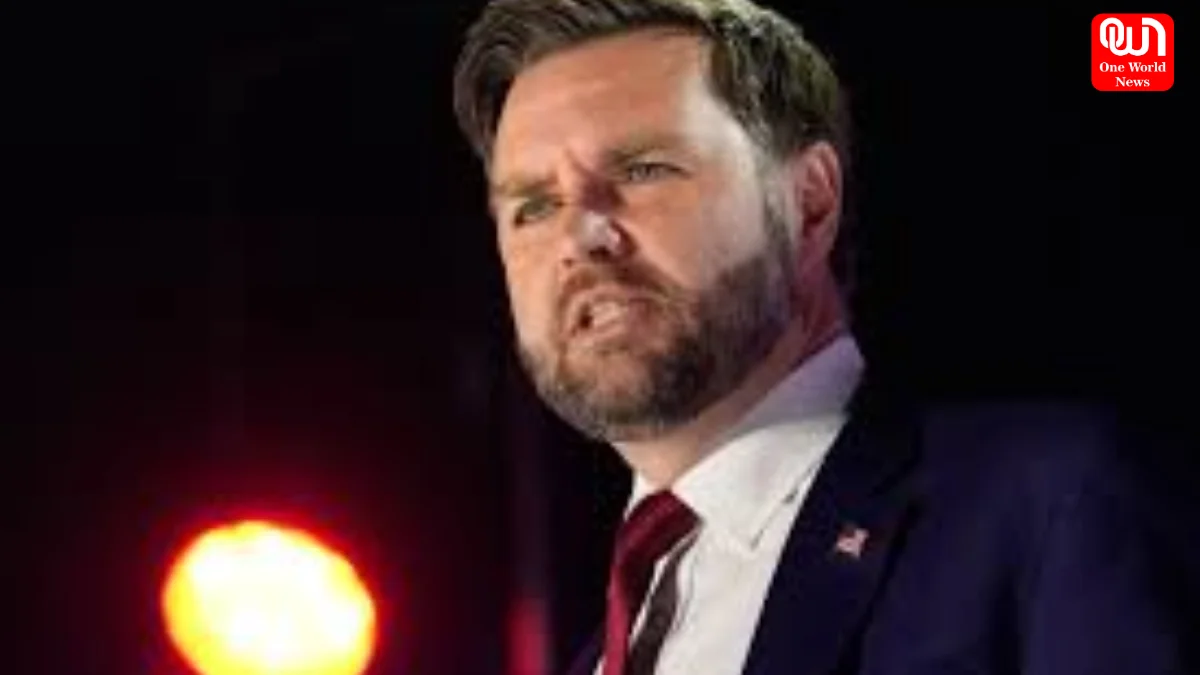
True Christian Politics: D Vance Defends H-1B Restrictions as Visa Uncertainty Grows for Indian Professionals
US Vice President JD Vance has reignited debate over immigration and labour policy after publicly defending tighter restrictions on the H-1B visa programme. Framing the issue as both moral and economic, Vance described the policy as central to what he called “true Christian politics,” arguing that American labour must be protected from what he sees as unfair global competition.
Speaking at Turning Point USA’s annual convention, Vance emphasized that Christian values should shape not only social policy but also economic decision-making. According to him, governance rooted in faith must extend to how jobs, labour, and national dignity are treated.
Immigration as a Moral Question
At the heart of Vance’s argument is the idea that immigration and employment policies are moral choices, not merely economic calculations. He questioned why governments penalize corporations that outsource jobs overseas, answering his own question by asserting the “inherent dignity of human work.”
In this context, D Vance Defends H-1B Restrictions as a way to prevent companies from bypassing American workers in favour of cheaper foreign labour. He argued that prioritising domestic employment is consistent with protecting the dignity of workers who depend on stable, well-paying jobs.
Vance made it clear that, in his view, a “true Christian politics” must place economic dignity alongside traditional conservative priorities such as family values and the protection of unborn life.
Linking Faith, Labour, and Policy
By connecting Christian ethics to labour policy, Vance positioned immigration reform as a values-driven agenda rather than a purely nationalist one. He argued that restricting skilled worker visas reflects a belief that work is not just a market commodity, but a moral good that deserves protection.
This framing has resonated strongly with conservative audiences who support “America First” economic principles. It also places immigration at the center of broader ideological debates shaping the future of the Republican Party.
Indian Professionals Face Growing Uncertainty
While D Vance Defends H-1B Restrictions as a moral necessity, the impact of these policies is being felt sharply by Indian professionals working in the United States. Reports indicate that many Indian H-1B visa holders who traveled home to renew their permits have been stranded after sudden changes to visa appointment schedules.
US consular offices reportedly cancelled or rescheduled interviews during mid-to-late December, coinciding with the holiday season. This disruption has left families uncertain about their ability to return to jobs, homes, and ongoing professional commitments in the US.
Immigration lawyers have warned that such unpredictability is creating emotional and financial stress for skilled workers who have long contributed to the American economy.
Read more: Cardi B Stuns in Gaurav Gupta Couture at Saudi Arabia Concert
Expanded Social Media Vetting
Adding to the turmoil is the expansion of social media vetting for visa applicants. Under updated policies, reviews of online presence now extend to all H-1B specialty occupation workers and their dependents. Previously, such scrutiny was largely limited to student and exchange visitor visa categories.
Applicants were informed that interview delays were linked to these enhanced checks, aimed at assessing national security and public safety risks. For many Indian professionals, the sudden expansion of this policy has introduced new uncertainty into an already complex immigration process.
Political Positioning in a Post-Trump Era
Vance’s remarks come at a time when conservative leaders are debating the future direction of the movement in a post-Trump landscape. Immigration restrictions and economic nationalism remain central pillars, and Vance has emerged as a prominent voice articulating these priorities.
Endorsed by influential conservative groups as a potential future leader, he has positioned himself as a bridge between traditional conservative values and modern populist economics. His defence of visa restrictions reinforces his alignment with voters who view globalisation as a threat to domestic employment.
Controversy Within Conservative Circles
Beyond immigration, Vance also addressed internal divisions within conservative politics. He declined to condemn controversial figures accused of antisemitism, arguing against what he termed “purity tests” within the movement. Instead, he advocated for a broad coalition united by patriotism rather than ideological perfection.
He reiterated his belief that the United States is and will remain a Christian nation, drawing strong applause from supporters. Vance also praised the administration’s stance on border enforcement, economic policy, and the rollback of diversity and inclusion initiatives.
read more: Redefining Womanhood: Rhea Chakraborty’s Brave Decision to Freeze Her Eggs
A Policy With Global Consequences
As D Vance Defends H-1B Restrictions, the debate highlights a growing tension between national labour priorities and global workforce realities. For American policymakers, the focus remains on protecting domestic jobs. For thousands of Indian professionals, however, the same policies have translated into disruption, uncertainty, and stalled careers.
The controversy underscores a broader question facing modern economies: how to balance national interests with the realities of an interconnected global workforce. As the debate continues, both political rhetoric and policy decisions are likely to have lasting implications on migration, labour, and international relations.
We’re now on WhatsApp. Click to join.
Like this post?
Register at One World News to never miss out on videos, celeb interviews, and best reads.