Why Ghee is a Superfood for Postpartum Recovery: A Timeless Ayurvedic Secret for New Mothers
How Consuming Ghee Supports Healing, Hormonal Balance, Lactation & Strength After Childbirth

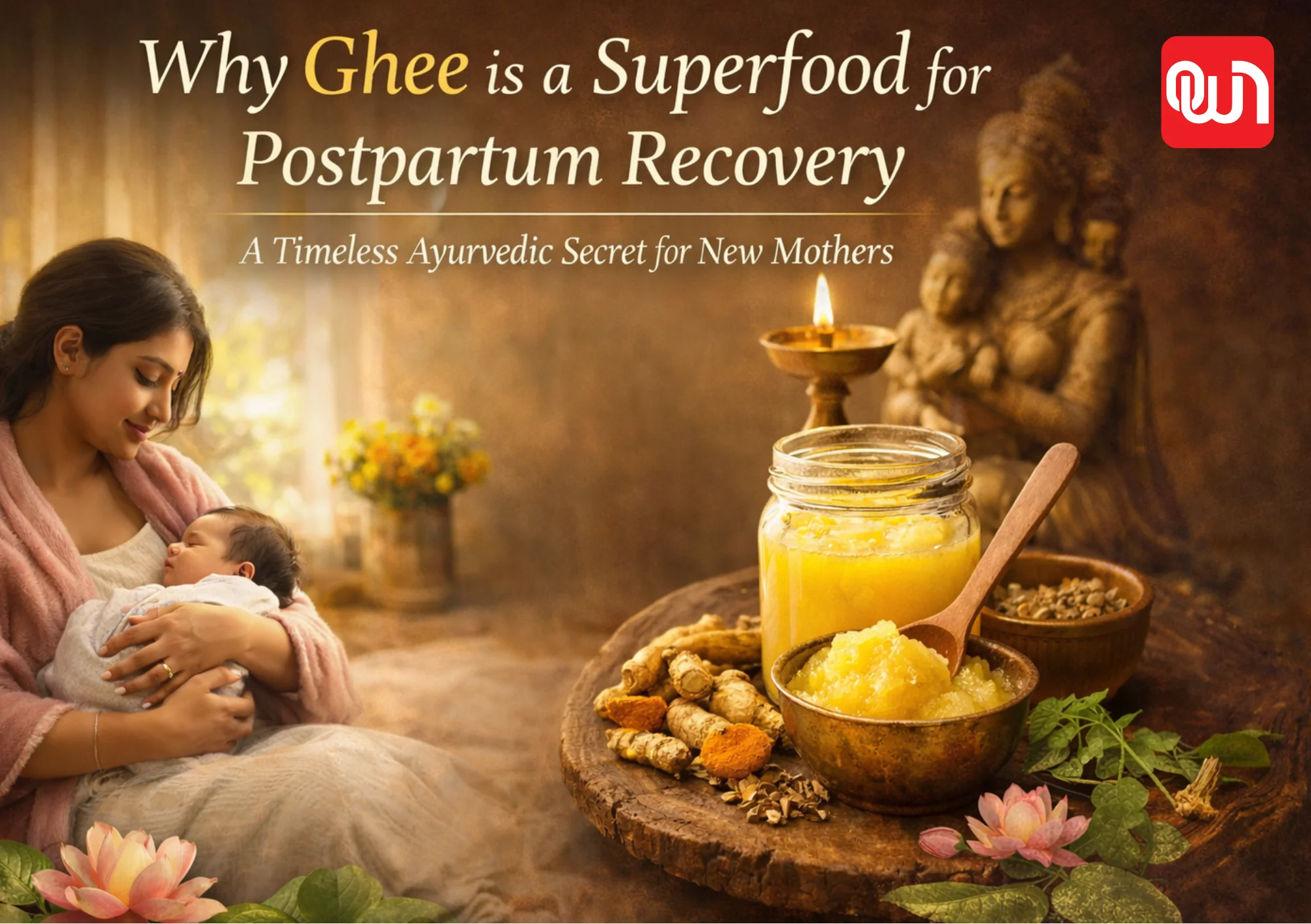
The postpartum period — often called the fourth trimester — is one of the most delicate and transformative phases in a woman’s life. After childbirth, a mother’s body undergoes intense physical recovery, hormonal fluctuations, emotional shifts, and nutritional depletion.
Amid modern supplements and recovery trends, one ancient superfood continues to stand strong across generations: Ghee.
Used for centuries in Ayurvedic postpartum care, ghee is not just clarified butter — it is a powerful healing fat that deeply nourishes, restores strength, and accelerates recovery for new mothers.
Let’s explore why consuming ghee can be a game-changer for postpartum healing.
What is Ghee & Why is it Special?
Ghee is clarified butter made by slowly simmering butter to remove water and milk solids, leaving behind pure golden fat rich in nutrients. In Ayurveda, ghee is considered “Sattvic” — meaning pure, healing, and life-enhancing.
Unlike processed fats, pure cow ghee is packed with:
Healthy saturated fats
Omega-3 fatty acids
Fat-soluble vitamins (A, D, E, K)
Butyric acid (a gut-healing compound)
Anti-inflammatory properties
For postpartum mothers, this nutrient density makes ghee an essential recovery food.
1. Accelerates Postpartum Healing & Tissue Repair
Childbirth — whether vaginal or C-section — causes significant tissue strain and internal healing requirements. Ghee supports:
Faster wound healing
Repair of reproductive tissues
Reduced internal inflammation
Strengthening of pelvic muscles
Its lubricating and nourishing qualities help rebuild depleted tissues (“Dhatu Poshana” in Ayurveda), making it ideal for postpartum recovery diets.
2. Balances Hormones & Reduces Postpartum Fatigue
Hormonal imbalance after childbirth can cause:
Mood swings
Hair fall
Brain fog
Low energy
Healthy fats are essential for hormone production. Ghee provides the building blocks for restoring hormonal balance naturally. It also supports adrenal health, reducing postpartum exhaustion and fatigue.
Many traditional Indian postpartum diets emphasize daily ghee consumption to stabilize energy and mood.
3. Enhances Breast Milk Quality & Lactation
Ghee is widely recommended in traditional diets for improving breast milk quality. Healthy fats help:
Increase milk production
Improve milk richness
Provide essential nutrients to the baby
When consumed in moderation, ghee supports better lactation without causing digestive heaviness.
In Ayurveda, ghee is often combined with herbs like shatavari for enhanced postpartum nourishment.
4. Strengthens Digestion & Prevents Postpartum Constipation
After delivery, digestion often becomes weak due to hormonal shifts and reduced mobility. Ghee contains butyric acid, which:
Strengthens gut lining
Reduces inflammation
Prevents constipation
Improves nutrient absorption
A spoon of warm ghee in meals helps restore digestive fire (“Agni”), which is central to postpartum healing in Ayurveda.
5. Rebuilds Strength & Lubricates Joints
Postpartum women often experience:
Body aches
Joint pain
Back discomfort
Calcium depletion
Ghee deeply nourishes bones and joints while supporting better calcium absorption. It also provides sustained energy without causing blood sugar spikes.
This is why traditional postpartum laddoos and recovery foods are rich in ghee.
6. Supports Mental Wellness & Emotional Stability
The postpartum period can be emotionally overwhelming. Healthy fats are essential for brain health. Ghee supports:
Memory & cognitive clarity
Reduced anxiety
Nervous system nourishment
Emotional stability
In Ayurvedic wisdom, ghee is considered “Medhya” — beneficial for intellect and mental strength.
How to Consume Ghee After Delivery
For safe and effective postpartum recovery:
Start with 1–2 teaspoons daily (as advised by a healthcare professional)
Add to warm khichdi, dal, roti, or soups
Use in postpartum laddoos
Mix in warm milk at night
View this post on Instagram
Always consult your doctor if you have gestational diabetes, high cholesterol, or C-section dietary restrictions.
Read More: Gut Health and Women Hormones Explained: The Hidden Impact on PCOS and Endometriosis
The Ayurvedic Perspective: Why Ghee is Non-Negotiable in Postpartum Care
According to Ayurveda, childbirth increases Vata dosha — causing dryness, weakness, anxiety, and instability. Ghee counters this by:
Providing lubrication
Restoring warmth
Nourishing depleted tissues
Grounding the nervous system
This is why traditional Indian households prioritize ghee in a mother’s 40-day postpartum diet.
View this post on Instagram
Final Thoughts: A Golden Elixir for the Fourth Trimester
In a world full of modern supplements, sometimes the most powerful healing foods are the simplest. Ghee is not just a cooking ingredient — it is a time-tested postpartum recovery superfood.
When consumed mindfully and in moderation, ghee can:
- Speed up postpartum healing
- Balance hormones
- Improve lactation
- Restore strength
- Support digestion
- Enhance mental well-being
For every new mother stepping into motherhood, a spoonful of this golden nourishment may be one of the most powerful gifts you can give your recovering body.
We’re now on WhatsApp. Click to join.
Like this post?
Register at One World News to never miss out on videos, celeb interviews, and best reads.