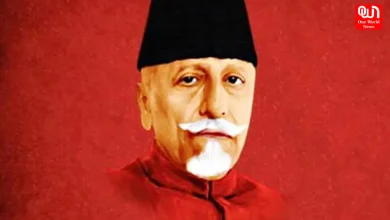
Sir Syed Ahmad Khan and the Power of Education in Modern India
Sir Syed Ahmad Khan transformed Indian society through education, reform, and vision, laying the foundation for modern Muslim education.

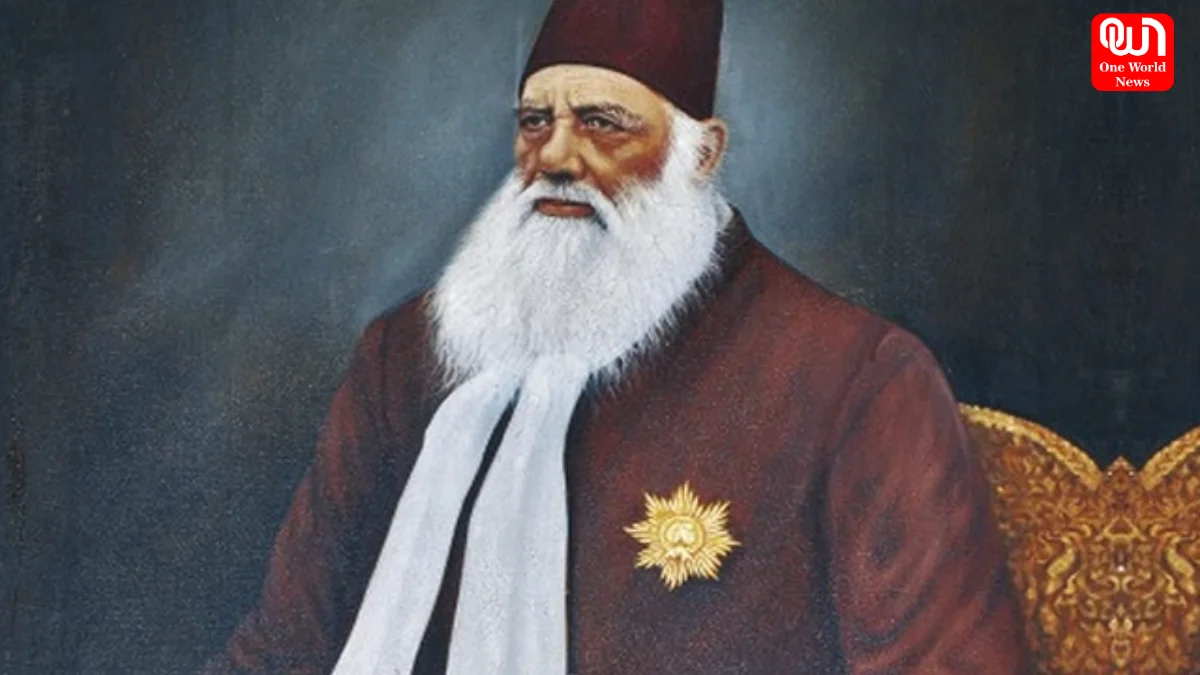
Sir Syed Ahmad Khan: The Visionary Reformer Who Shaped Modern Education in India
History often remembers kings, conquerors, and political power. Yet some of the most transformative figures shaped nations not through authority, but through ideas. Sir Syed Ahmad Khan was one such visionary — a reformer who believed education was the most powerful tool to rebuild a wounded society.
Born in 1817, Sir Syed Ahmad Khan lived through one of the most turbulent periods in Indian history. The uprising of 1857 left deep scars across the subcontinent, creating fear, mistrust, and division between communities and colonial rulers. At a time when anger and resentment were widespread, Sir Syed chose a different path — one rooted in awareness, dialogue, and learning.
Read more: Political Roundup: Key Developments Shaping the World on Feb 6, 2026
A Reformist in a Time of Crisis
After 1857, Indian Muslims faced political marginalization and social decline. Many feared modern education, particularly Western sciences, seeing them as a threat to tradition and faith. Sir Syed Ahmad Khan challenged this fear head-on.
He believed that progress did not lie in isolation, but in understanding the modern world. For him, education was not just about employment or status — it was about dignity, confidence, and intellectual freedom.
Sir Syed argued that without scientific knowledge and rational thinking, no community could survive in a changing world. This belief placed him at odds with conservative voices, yet he remained steadfast in his mission.
The Birth of a Historic Educational Movement
Sir Syed Ahmad Khan’s most enduring legacy is the institution that would later become Aligarh Muslim University. In 1875, he founded the Mohammedan Anglo-Oriental College, inspired by the British education system but rooted in Indian values.
His vision was revolutionary for its time. He wanted Indian Muslims to study modern sciences, mathematics, philosophy, and English, alongside moral and cultural education. This approach aimed to bridge the gap between tradition and modernity.
What began as a college eventually evolved into one of India’s most prestigious universities, educating generations of scholars, leaders, scientists, and thinkers.
Education as Empowerment
Sir Syed Ahmad Khan believed true empowerment came not from protest alone, but from preparation. He encouraged communities to embrace reason over fear and learning over division.
He wrote extensively, urging people to abandon blind opposition to modern education. His writings emphasized rational interpretation, social reform, and the importance of intellectual curiosity.
Through education, Sir Syed sought to rebuild self-respect and confidence among Indian Muslims — qualities he believed were essential for social progress.
Facing Opposition with Resilience
Sir Syed’s ideas were not universally accepted. He faced criticism from traditionalists who viewed Western education with suspicion and from colonial authorities who questioned his influence.
Yet he remained resilient. He understood that reform often invites resistance and that meaningful change takes time. His courage lay in standing firm when compromise would have been easier.
Sir Syed Ahmad Khan did not seek popularity — he sought progress.
A Legacy That Lives On
Today, millions pass through the gates of Aligarh Muslim University, often unaware of the immense struggle behind its foundation. Every classroom, library, and lecture hall reflects Sir Syed’s belief that education liberates minds and reshapes destinies.
Read more: India-US Trade Deal: Agriculture and Farmers Protected Amid Negotiations
His legacy extends beyond institutions. It lives in the idea that knowledge can unite rather than divide, and that reform begins with understanding, not hostility.
Why Sir Syed Ahmad Khan Still Matters
In an era marked by polarization and misinformation, Sir Syed Ahmad Khan’s message feels remarkably relevant. He reminds us that progress requires courage, patience, and faith in education.
History may remember rulers, but Sir Syed is remembered through reason.
He was not merely building a college — he was building a future.
Remembering Sir Syed Ahmad Khan is not just about honoring the past.
It is about recognizing the enduring power of education to transform societies.
We’re now on WhatsApp. Click to join.
Like this post?
Register at One World News to never miss out on videos, celeb interviews, and best reads.