Abul Kalam Azad Death Anniversary: Life, Legacy, and National Contribution
Abul Kalam Azad death anniversary honors the freedom fighter and educationist who shaped India’s independence and modern education system.

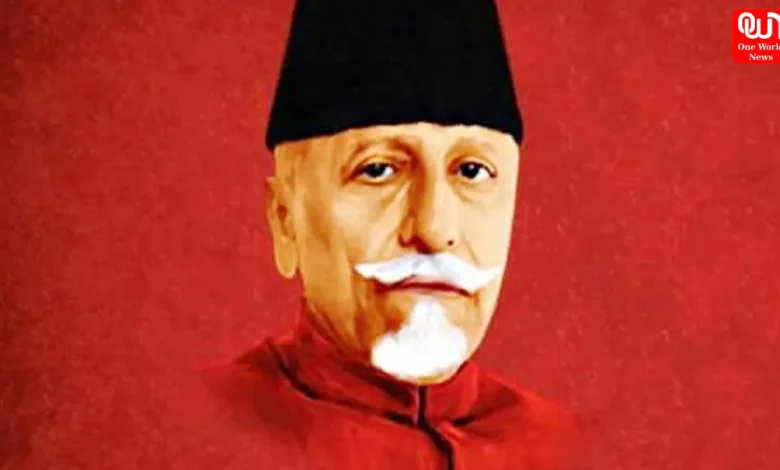
Abul Kalam Azad Death Anniversary: Remembering a Visionary Leader Who Shaped Modern India
The abul kalam azad death anniversary is observed on 22 February, marking the day in 1958 when India lost one of its most influential freedom fighters, scholars, and nation-builders. On this day, the country remembers a leader whose intellect, courage, and commitment to unity played a crucial role in shaping independent India.
Maulana Abul Kalam Azad was not only a key figure in the freedom struggle but also a thinker who believed deeply in education, harmony, and democratic values.
Read more: Sitharaman Cites Elon Musk Post, Slams Opposition on India’s GDP Role
Early Life and Intellectual Roots
Born in 1888, Abul Kalam Azad was exposed to learning at an early age. He mastered Arabic, Persian, Urdu, and philosophy, developing a strong foundation in theology and political thought. His intellectual curiosity went beyond religious studies, drawing him toward nationalism and social reform.
From a young age, Azad believed that knowledge was the strongest weapon against oppression. This belief later shaped both his political journey and his contributions to independent India.
Role in India’s Freedom Struggle
The abul kalam azad death anniversary also serves as a reminder of his fearless role in the fight against British colonial rule. Azad emerged as a powerful voice through journalism, using his writings to awaken political consciousness among Indians.
He strongly opposed British policies and encouraged unity across religious and cultural lines. Azad believed that India’s strength lay in its diversity and that freedom could only be achieved through collective struggle.
As a senior leader of the Indian National Congress, he worked closely with other prominent leaders and became one of the youngest presidents of the party. His leadership during crucial years of the independence movement earned him widespread respect.
Champion of Hindu-Muslim Unity
One of Abul Kalam Azad’s most enduring legacies is his unwavering stand for communal harmony. At a time when divisions were deepening, he consistently advocated for unity between Hindus and Muslims.
He opposed the partition of India, believing it would weaken the nation and cause long-term social wounds. Even when his views were unpopular, Azad stood firm, guided by principle rather than political convenience.
The abul kalam azad death anniversary is often observed as a moment to reflect on these values of unity, tolerance, and coexistence.
Architect of Modern Indian Education
After independence, Abul Kalam Azad became India’s first Education Minister, a role in which he left an indelible mark. He believed that education was the foundation of democracy and national progress.
Under his leadership, institutions of higher learning were strengthened, and policies were shaped to promote scientific thinking, cultural education, and academic freedom. His vision laid the groundwork for a modern education system that aimed to be inclusive and forward-looking.
Azad strongly emphasized the importance of primary education, women’s education, and the development of cultural institutions. His ideas continue to influence India’s education policies decades after his passing.
Read more: US Trade Deal: India Gains Edge With 18% Tariff Over Pakistan, China, Bangladesh
A Scholar, Not Just a Politician
Unlike many political leaders of his time, Abul Kalam Azad was deeply rooted in scholarship. He wrote extensively on religion, philosophy, and politics, blending intellectual depth with practical leadership.
His writings reflect a mind committed to rational thought, ethical leadership, and social responsibility. The abul kalam azad death anniversary is also a tribute to his role as a thinker who believed that ideas could transform societies.
Death and National Mourning
Abul Kalam Azad passed away on 22 February 1958, leaving behind a nation that deeply mourned his loss. His death marked the end of an era defined by moral leadership and intellectual clarity.
He was laid to rest with full national honors, and his legacy continues to be celebrated through institutions, awards, and memorials named after him.
Why His Legacy Still Matters
Even today, Abul Kalam Azad’s ideas remain deeply relevant. His emphasis on education, unity, and democratic values speaks directly to the challenges of the modern world.
The abul kalam azad death anniversary is not only a moment of remembrance but also a call to revisit the principles he stood for — dialogue over division, learning over ignorance, and unity over hatred.
Conclusion
Abul Kalam Azad was more than a freedom fighter. He was a visionary who believed that a strong nation is built on educated minds and united hearts. As the country observes his death anniversary, it honors a legacy that continues to guide India’s moral and intellectual path.
Remembering him is not just about the past — it is about reaffirming the values that shape the future.
We’re now on WhatsApp. Click to join.
Like this post?
Register at One World News to never miss out on videos, celeb interviews, and best reads.