Snowman Burning Day 2026: A Unique Celebration of the Changing Seasons
Snowman Burning Day 2026 celebrates the end of winter with fire, folklore, and festivities, marking the first day of spring in a quirky seasonal tradition.

Snowman Burning Day 2026: The Fiery Tradition That Bids Farewell to Winter and Welcomes Spring
Every year on March 20, people gather — in person or in spirit — to celebrate Snowman Burning Day 2026, a quirky but meaningful tradition that marks the transition from winter to spring. It is a day when fiery celebration replaces cold snow, symbolizing hope, renewal, and the approaching warmth of a new season.
At its core, Snowman Burning Day is a symbolic farewell to winter’s chill and a warm welcome to spring’s freshness. It blends celebration with folklore, community involvement, and a touch of whimsy that reflects the joy many feel as winter loosens its grip on the world.
Origins of Snowman Burning Day
The tradition of burning a snowman traces back to 1971 at Lake Superior State University (LSSU) in Sault Ste. Marie, Michigan. That year, a campus club known as the Unicorn Hunters first lit a snowman on fire to mark the start of spring — and the tradition stuck. Over the decades, the event has become an annual fixture, drawing students, faculty, townspeople, and visitors who want to participate in this fiery farewell to winter.
Read more: ICC Deputy Chairman Imran Khwaja Asked to Convince Pakistan to Face India at T20 WC
The inspiration for the ritual, however, comes from a much older custom in Europe. In Germany’s Rose Sunday Festival, a straw snowman is burned in a public setting to symbolize the defeat of winter and the arrival of spring. This blend of folklore and ritual created a perfect template for Snowman Burning Day at LSSU and in other communities that have adopted the practice.
What Happens on Snowman Burning Day
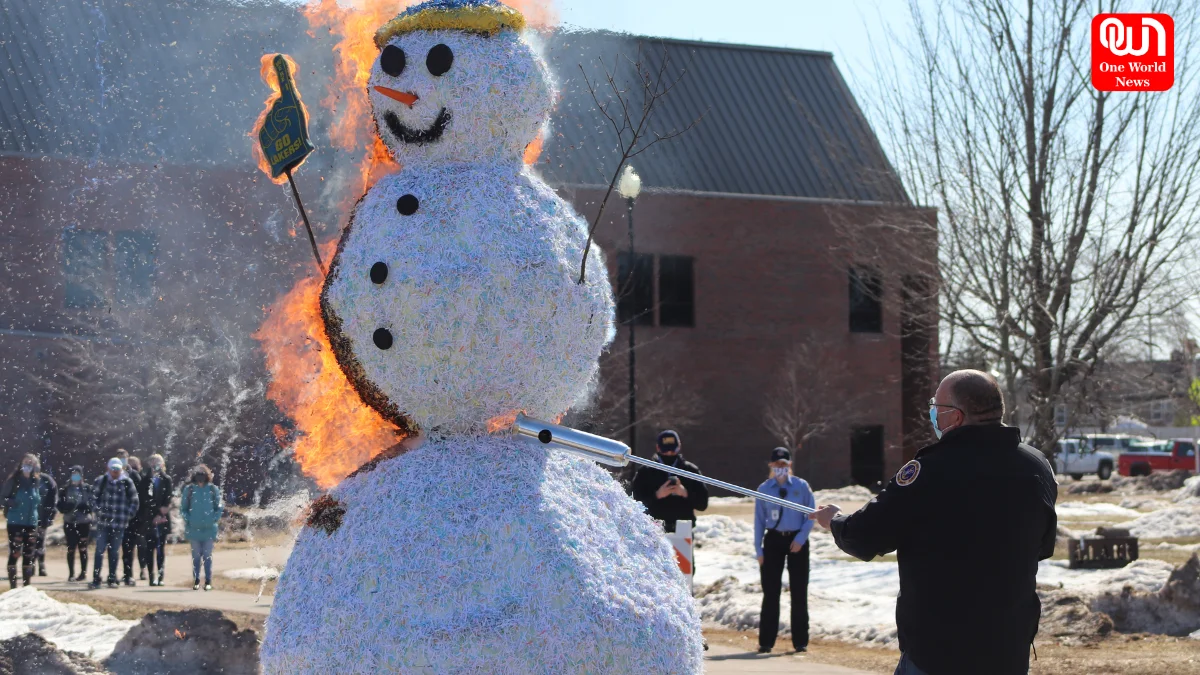
Despite its name, the snowman involved in this tradition isn’t usually made of real snow. Instead, it is constructed from materials such as wood, paper, straw, wire, and paint, often towering 10 to 12 feet tall.
On the day of the event, the assembled snowman is set alight in a ceremonial burn that brings people together. Spectators gather around the blazing figure as flames consume the effigy that represents winter’s end. The rising smoke is more than dramatic — in some interpretations of the folklore, it is believed to help “ward off blizzards” and usher in spring-like weather.
Community and Celebration
Snowman Burning Day is more than just fire and smoke. At LSSU, the event has evolved into a full community celebration. Poetry readings are often a highlight, with students, local children, and residents composing verses that are read as part of the ceremony. Some communities have also embraced food, music, and social gatherings tied to the day.
The event reflects a blend of creativity, tradition, and community spirit. It is not just about getting rid of winter — it is about people coming together to celebrate the changing seasons and the promise of warmer days ahead.
A Tradition With Meaning
Although Snowman Burning Day began as a campus tradition, the idea resonates with people far beyond the university. Festivals and ceremonial burns have long been part of human culture whenever societies mark the turning of seasons or the passage of time.
Like the Swiss spring festival Sechseläuten — where an effigy known as the Böögg is burned to symbolize the end of winter — Snowman Burning Day touches on something primal: the symbolic release of winter’s constraints and the optimism of spring.
Modern Interpretations
In recent years, the tradition has even inspired new celebrations beyond its campus roots. Some towns and communities have begun hosting Snowman Burning events of their own, inviting residents to take part in crafting effigies and watching them blaze as part of a broader spring festival.
These newer events often emphasize community involvement, creativity, and safety, with local officials and fire departments overseeing the bonfires. What began as a campus custom is gradually becoming a shared seasonal ritual for many.
Why It Matters Today
Snowman Burning Day 2026 is about more than novelty. It symbolizes a universal human experience — the shift from hardship to hope. Winter can be long, cold, and isolating. Spring brings renewed light, warmth, and growth. Burning an effigy of winter’s symbol embodies that emotional transition.
Read more: Political Roundup: Key Global Political Developments Explained
In a world where seasonal celebrations are often tied to cultural rituals and folklore, Snowman Burning Day offers a playful yet meaningful moment to gather, reflect, and anticipate the warmth ahead.
How to Celebrate
Participating in Snowman Burning Day doesn’t require travel to Michigan or attendance at a big event. Many people celebrate at home by creatively building their own snowman effigies from recyclable materials and lighting them safely (with proper precautions) as a symbolic gesture of bidding winter goodbye. Alternatively, sharing stories, photos, and memories of past snowy seasons can be a way to honor the day’s spirit.
Regardless of how you observe it, Snowman Burning Day 2026 is a reminder that the seasons change, seasons of life shift, and there is always room for joy and renewal as we move from one chapter to the next.
We’re now on WhatsApp. Click to join.
Like this post?
Register at One World News to never miss out on videos, celeb interviews, and best reads.