Asteroids Still Missing: Are Thousands of City-Killer Space Rocks Undetected by NASA?
Asteroids Still Missing from NASA radar may pose city-level threats. NASA tracks near-Earth objects, but thousands remain undetected.

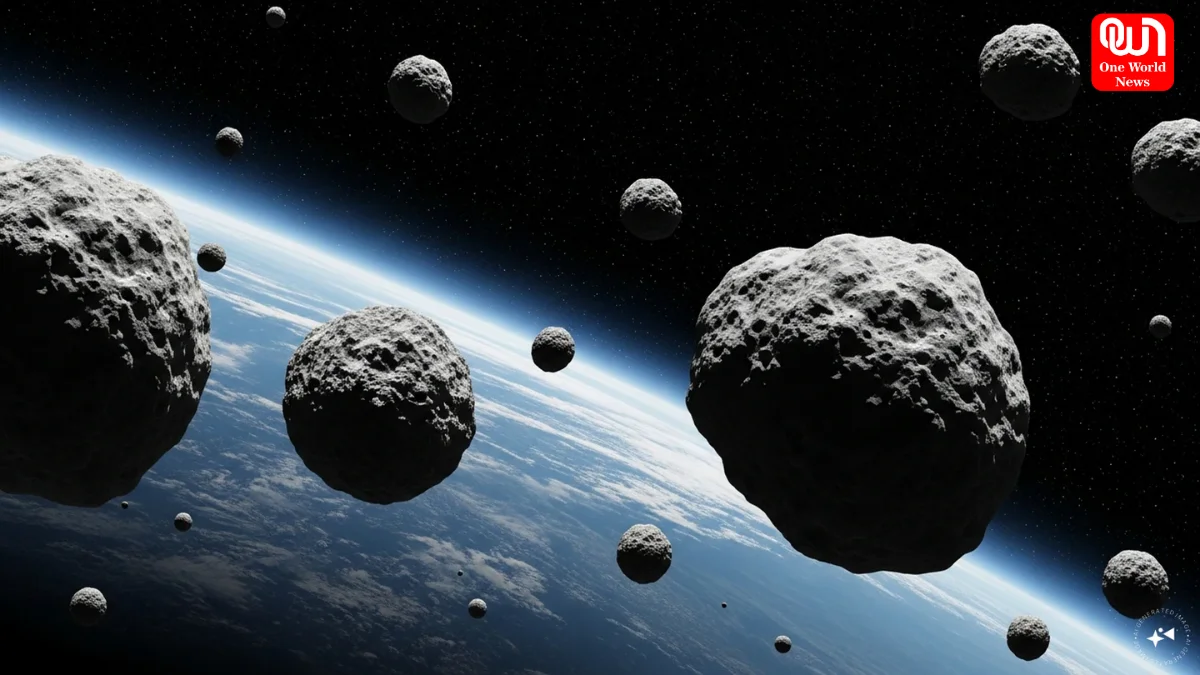
Asteroids Still Missing from NASA Detection Systems – The Growing Threat of Undiscovered City-Killer Space Rocks and Planetary Defense Challenges
For decades, NASA has monitored the skies for near-Earth objects (NEOs) that could threaten our planet. Yet despite advanced telescopes and global coordination, experts warn that thousands of Asteroids Still Missing from current detection systems could pose a serious danger — particularly those classified as “city-killers.”
These are not planet-destroying giants like the asteroid believed to have ended the age of dinosaurs. Instead, they are mid-sized space rocks — typically between 140 meters and 300 meters wide — large enough to devastate an entire metropolitan area if they were to strike Earth.
What Are ‘City-Killer’ Asteroids?
City-killer asteroids are large enough to release energy equivalent to hundreds of nuclear bombs upon impact. While smaller objects burn up in Earth’s atmosphere, these mid-sized asteroids can survive atmospheric entry and cause catastrophic regional damage.
NASA defines potentially hazardous asteroids (PHAs) based on size and orbital proximity to Earth. Objects larger than 140 meters that come within 7.5 million kilometers of Earth’s orbit fall into this category. According to planetary defense experts, many of these objects have been identified — but not all.
The real concern lies in the percentage of asteroids still missing from NASA detection programs.
Read more: Political Roundup: Global Power Shifts from AI Diplomacy to Ukraine Peace Talks
How Many Asteroids Are Still Missing?
NASA estimates that it has discovered more than 95% of near-Earth asteroids larger than one kilometer — the kind capable of global extinction events. However, when it comes to mid-sized “city-killer” asteroids, detection rates are significantly lower.
Studies suggest that tens of thousands of near-Earth objects measuring over 140 meters may exist. Yet only a fraction of them have been fully cataloged. That means thousands of Asteroids Still Missing remain undetected, silently orbiting the Sun.
The difficulty lies in their size and visibility. Smaller asteroids reflect less sunlight, making them harder to spot with ground-based telescopes. Some approach Earth from the direction of the Sun, making detection nearly impossible until they have already passed by.
NASA’s Detection Systems and Radar Limitations
NASA relies on a combination of ground-based telescopes, infrared observatories, and radar systems to detect and track near-Earth objects. Programs such as the Near-Earth Object Observations Program scan the skies nightly for moving objects.
Radar systems can provide precise data on an asteroid’s size, shape, and trajectory — but only after the object has already been detected optically. Radar cannot scan the entire sky blindly; it must be directed toward known targets. This limitation contributes to the ongoing issue of asteroids still missing from comprehensive monitoring.
To address this gap, NASA is advancing space-based detection efforts. Infrared telescopes positioned beyond Earth’s atmosphere can detect dark asteroids that ground systems might miss. These next-generation systems are designed to identify previously hidden threats years before potential impact.
How Real Is the Risk?
Statistically, the probability of a large asteroid striking Earth in any given year is low. However, the consequences of even one undetected city-killer impact would be catastrophic at a regional scale.
History provides reminders. The 1908 Tunguska event in Siberia, believed to have been caused by a relatively small asteroid or comet fragment, flattened over 2,000 square kilometers of forest. A similar event over a densely populated city today would have devastating consequences.
That’s why NASA and international space agencies treat planetary defense as a serious scientific priority.
Planetary Defense: What Is Being Done?
NASA’s planetary defense strategy includes detection, tracking, characterization, and mitigation. One milestone was the Double Asteroid Redirection Test (DART), which successfully altered the orbit of a small asteroid moonlet — proving that deflection technology is possible.
The long-term goal is simple: detect hazardous asteroids early enough to act. With years of warning, spacecraft could potentially nudge an asteroid off course, preventing disaster.
Still, experts emphasize that early detection is everything. The challenge remains locating the thousands of asteroids still missing before they pose a real threat.
Read more: India Set To Get Its First National Cow Culture Museum In Mathura
Why Awareness Matters
The phrase “Earth at risk” may sound dramatic, but it reflects an ongoing scientific challenge rather than immediate panic. NASA continues to expand detection capabilities, improve tracking precision, and collaborate globally.
While there is no known asteroid currently on a confirmed collision course with Earth, the existence of asteroids still missing from full detection underscores the importance of continued investment in space monitoring.
In the vastness of space, vigilance is our best defense. Through science, technology, and global cooperation, humanity is working to ensure that if a threat emerges, we will see it coming — and be ready to respond.
We’re now on WhatsApp. Click to join.
Like this post?
Register at One World News to never miss out on videos, celeb interviews, and best reads.