Pakistan Reinforces Anti-Drone Shield Along LoC After Operation Sindoor
Pakistan is rushing to strengthen its anti-drone shield along the LoC after Operation Sindoor exposed gaps in defence and surveillance capabilities.

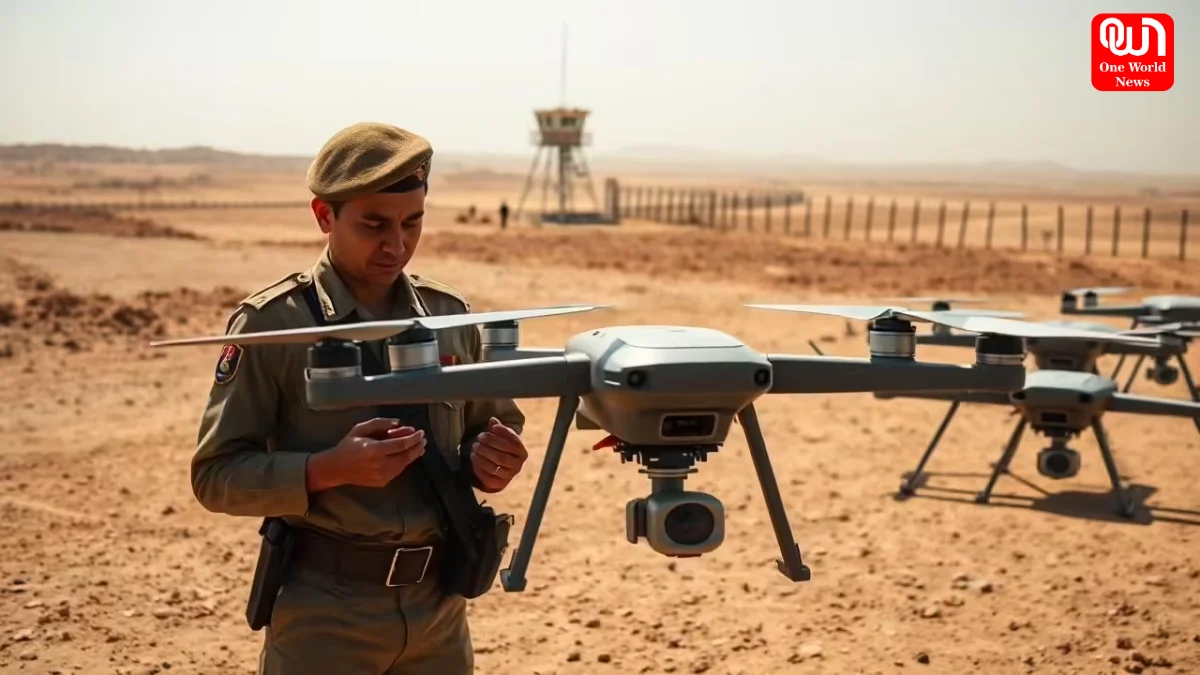
Pakistan Scrambles to Strengthen Anti-Drone Shield Along LoC After Operation Sindoor Exposes Military Vulnerabilities
Pakistan has begun urgently reinforcing its military defences along the Line of Control (LoC), driven by growing unease within its security establishment following the impact of Operation Sindoor. Intelligence assessments indicate that Islamabad fears another swift, technology-driven Indian operation that could once again expose critical weaknesses in its border defence posture.
The focus of this renewed effort is the rapid deployment of an anti-drone shield along the LoC, highlighting how unmanned warfare has reshaped modern conflict dynamics in South Asia.
Rising Anxiety After Operation Sindoor
According to intelligence inputs, Pakistan’s military leadership has been deeply unsettled by the effectiveness of India’s drone and loitering munition capabilities demonstrated during Operation Sindoor. The operation reportedly showcased India’s ability to conduct surveillance, target acquisition, and precision strikes using unmanned systems with minimal warning time.
Unlike traditional military engagements involving large troop movements, Operation Sindoor emphasized speed, accuracy, and technological dominance. This shift has heightened Pakistan’s concerns that future actions could be fast, localized, and difficult to counter through conventional means.
Deployment of Anti-Drone Units Along the LoC
In response, Pakistan has rapidly begun deploying drone detection and jamming systems in forward areas along the LoC. Intelligence sources indicate that at least 35 specialized anti-drone units have been positioned under eight Pakistani Army brigades.
These deployments have been observed opposite Rawalakot, Kotli, and Bhimber, areas considered strategically sensitive by Indian security planners. The choice of these sectors suggests that Pakistan is prioritizing regions where terrain complexity and proximity to the LoC increase vulnerability to drone-based surveillance and strikes.
The emphasis on strengthening the anti-drone shield along the LoC reflects a recognition that unmanned aerial threats have become a central feature of modern border warfare.
Read more: Political Roundup: Major Political Headlines Shaping the World Today
Drone Warfare Becomes a Strategic Priority
Anti-drone warfare has now emerged as a key operational priority for Pakistan’s military leadership. Intelligence assessments suggest Islamabad is particularly concerned about its limited ability to counter swarming drones and loitering munitions, especially in rugged mountainous terrain where radar coverage and response time are constrained.
Loitering munitions, which can hover over targets before striking, pose a unique challenge by blurring the line between surveillance and attack. Combined with drone swarms, they significantly reduce reaction windows for defenders, making traditional air defence systems less effective.
This evolving threat landscape has forced Pakistan to rethink its defensive strategy along the LoC.
Repairing Damage While Racing to Rearm
The defensive push comes even as Pakistan continues to repair infrastructure damaged during Operation Sindoor. Rather than slowing military spending amid economic strain, Islamabad has reportedly accelerated weapons procurement to address critical capability gaps.
Over the past two to three months, Pakistan has held multiple rounds of talks with China and Turkey to secure emergency arms purchases and explore joint production arrangements. These discussions underline the urgency with which Pakistan is seeking to modernize its military hardware.
Expanding Firepower and Battlefield Coordination
Alongside strengthening its anti-drone shield along the LoC, Pakistan is also upgrading its broader military capabilities. Intelligence inputs indicate that the Pakistani Army is inducting new command-and-control vehicles designed to improve battlefield coordination and real-time response.
Additionally, Islamabad has finalized a deal to acquire 300 Fatah rockets, significantly enhancing its long-range strike capability. This move appears aimed at restoring deterrence balance following the technological edge demonstrated by India during Operation Sindoor.
At the same time, Pakistan is overhauling its armoured fleet, replacing ageing tanks that are increasingly vulnerable on a battlefield dominated by drones and precision-guided munitions.
A Shift in South Asian Military Doctrine
The developments signal a broader shift in regional military doctrine. The focus is moving away from sheer manpower and heavy armor toward technology-driven warfare centered on drones, electronic warfare, and precision strikes.
For Pakistan, the urgency to reinforce its anti-drone shield along the LoC reflects an acknowledgment that future conflicts may be decided in minutes rather than days, with information dominance playing a decisive role.
Read more: Who Is Anand Varadarajan? Starbucks Names Ex-Amazon Executive as Chief Technology Officer
Looking Ahead
As India continues to expand its unmanned and loitering munition capabilities, Pakistan’s defensive measures are likely to intensify. However, experts note that anti-drone systems require constant upgrades to remain effective against rapidly evolving technology.
The post-Operation Sindoor landscape has clearly altered strategic calculations in the region. Pakistan’s scramble to strengthen its anti-drone shield along the LoC underscores how modern warfare has entered a new phase — one where technology, speed, and precision outweigh traditional measures of power.
We’re now on WhatsApp. Click to join.
Like this post?
Register at One World News to never miss out on videos, celeb interviews, and best reads.