Qiu Jin: The Fearless Revolutionary Who Defied Tradition and Ignited China’s Feminist Awakening
Qiu Jin, executed in 1907, was a poet and revolutionary who fought oppression. Her courage made Qiu Jin a symbol of feminism and resistance.

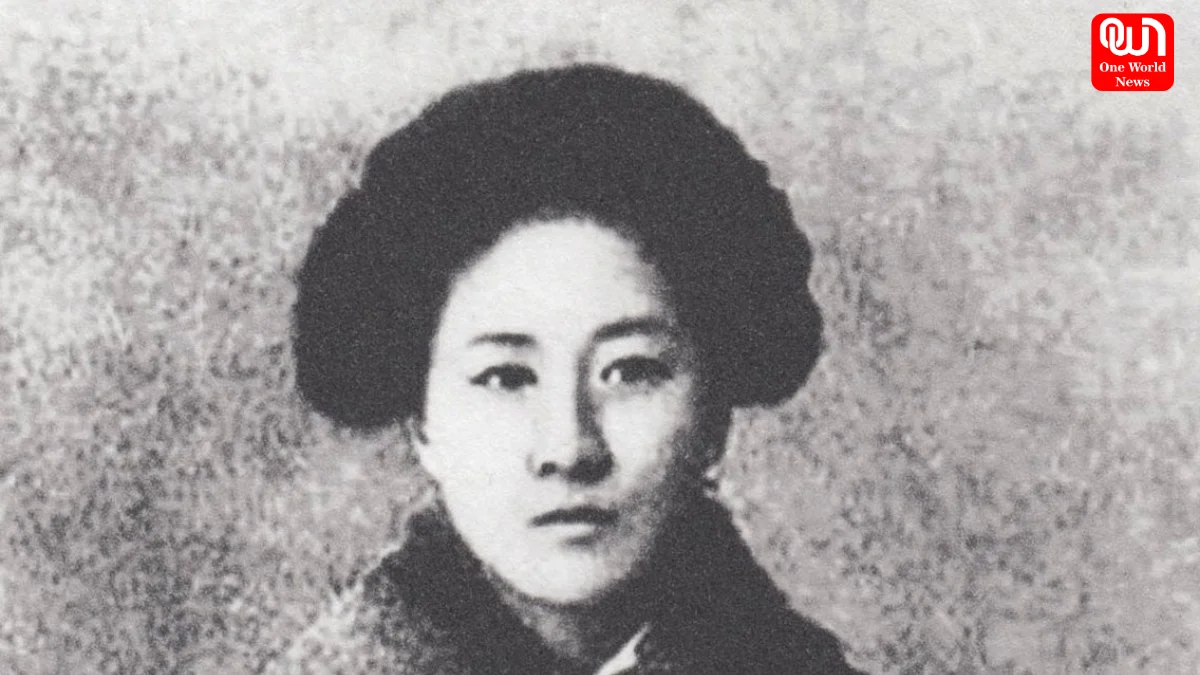
Qiu Jin – The Poet Warrior of China Who Challenged Oppression, Fought for Women’s Freedom, and Became a Martyr of Revolution in 1907
Born on November 8, 1875, in Zhejiang, China, Qiu Jin entered a society bound tightly by rigid traditions and strict gender roles. Women were expected to remain silent, obedient, and confined within domestic walls. But from an early age, Qiu Jin questioned those expectations. She refused to accept a world where education was denied to women and freedom was reserved only for men. Her life would become a rebellion against silence — a bold declaration that courage outweighs conformity.
Breaking Tradition and Choosing Revolution
In a time when foot-binding symbolized obedience and submission, Qiu Jin chose a radically different path. She cut her hair short, rejecting conventional femininity. She pursued education and broadened her intellectual horizons, eventually traveling to Japan in the early 1900s to study. There, she encountered revolutionary ideas and nationalist movements that fueled her desire to transform China.
While abroad, Qiu Jin trained in martial arts and immersed herself in political thought. She believed that national liberation and women’s liberation were inseparable. For her, freedom was not partial — it had to be complete. When she returned to China, she carried with her a fierce determination to challenge both foreign domination and internal oppression.
Read more: India Set To Get Its First National Cow Culture Museum In Mathura
Qiu Jin the Poet and Voice of Defiance
Qiu Jin was not only a revolutionary strategist but also a gifted poet. Her writings were passionate, sharp, and filled with urgency. Through her poetry, she condemned injustice and called upon women to rise. Her words were sharper than swords, cutting through centuries of silence. She urged women to pursue education, reject forced marriages, and reclaim their dignity.
Her literary work became a rallying cry for reform. She used newspapers and essays to spread revolutionary ideas, encouraging unity against the declining Qing Dynasty. In a time when speaking out could cost one’s life, Qiu Jin chose expression over fear.
Today, her poetry still echoes with defiance. Her verses remain studied not just as literary achievements but as political manifestos that challenged the foundations of inequality.
Leadership and Revolutionary Action
Qiu Jin did not limit her activism to writing. She became involved in secret revolutionary societies aimed at overthrowing the Qing government. She worked alongside other reformists and nationalists who believed that China needed sweeping transformation. She also became the head of a women’s school, which she used as a cover to train students in both academics and revolutionary discipline.
Her actions reflected extraordinary bravery. At a time when women were rarely seen in political leadership, Qiu Jin stood at the forefront of rebellion. She believed that true patriotism required sacrifice and that silence in the face of injustice was betrayal.
The Execution of Qiu Jin in 1907
In July 1907, authorities uncovered a revolutionary plot connected to her network. Qiu Jin was arrested. Despite interrogation and pressure, she refused to betray her comrades. On July 15, 1907, at just 31 years old, Qiu Jin was executed.
Her death was meant to silence dissent. Instead, it immortalized her.
The image of Qiu Jin facing execution with dignity transformed her into a martyr for both feminist and nationalist causes. News of her courage spread widely, inspiring countless others to continue the struggle she had begun.
The Enduring Legacy of Qiu Jin
Though her life was brief, Qiu Jin’s impact was profound. She is remembered today as one of China’s earliest feminist revolutionaries — a woman who dared to demand equality in a society structured to deny it. Her legacy bridges literature and activism, proving that the pen and the sword can serve the same cause.
Read more: Political Roundup: Global Power Shifts from AI Diplomacy to Ukraine Peace Talks
Today, her name stands as a symbol of feminism and revolution. Schools, memorials, and historical studies continue to honor her contribution to China’s transformation in the early twentieth century. She represents not only resistance against political tyranny but also resistance against cultural constraints placed upon women.
Because legends do not die. They ignite generations.
Qiu Jin’s courage reminds us that revolution begins in thought, grows through voice, and is sustained by sacrifice. Her story continues to inspire those who believe in justice, equality, and fearless conviction.
History remembers the brave. And Qiu Jin remains one of its brightest flames.
We’re now on WhatsApp. Click to join.
Like this post?
Register at One World News to never miss out on videos, celeb interviews, and best reads.