
The Educational Value of Pro Forma Invoice Templates in Business Documentation
Learn about pro forma invoice templates, their purpose, key components, and role in business documentation, international trade, and financial planning.

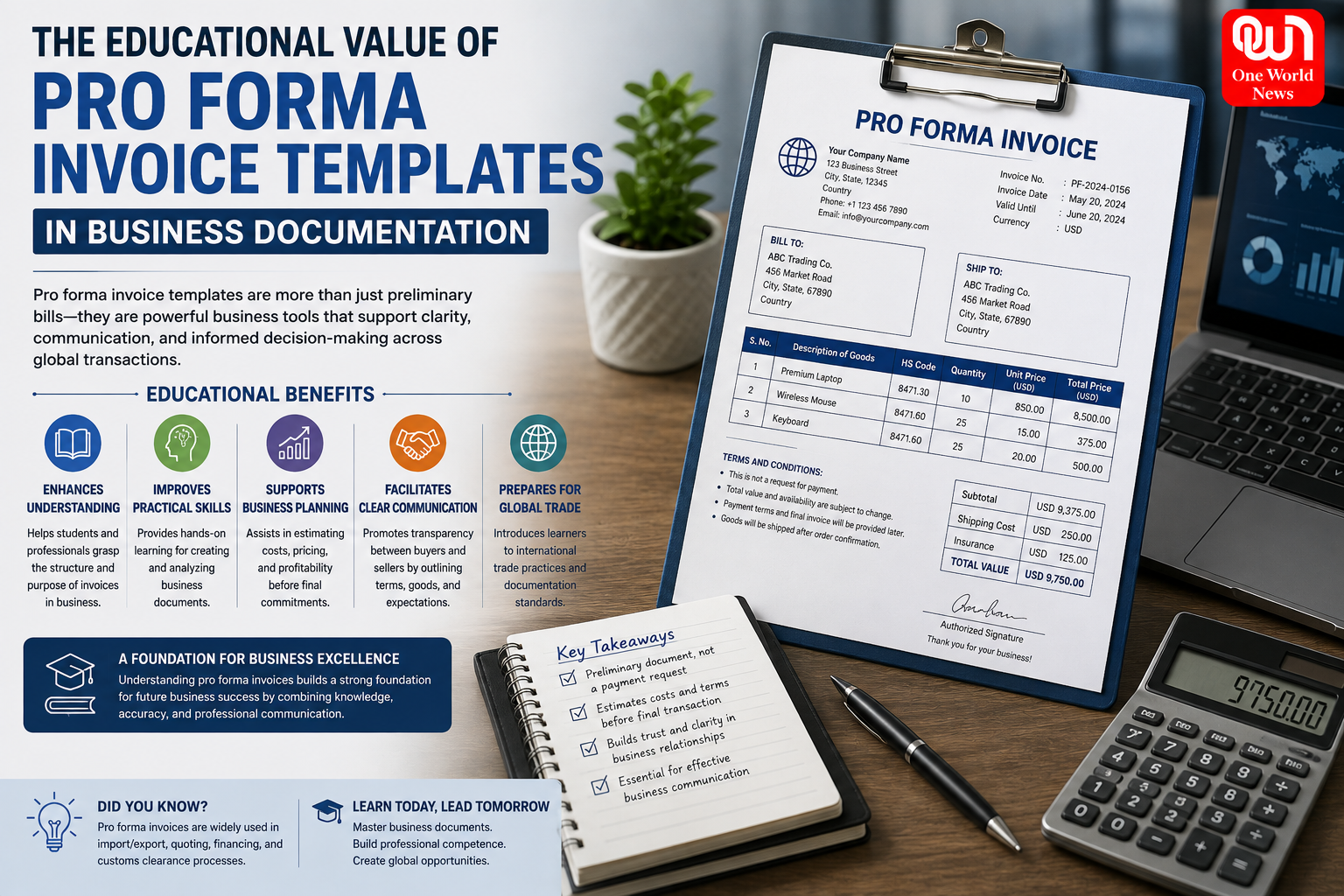
Business documentation is an essential part of commercial activities around the world.
Every organization, regardless of its size or industry, depends on standardized documents to communicate information, maintain records, and support financial transparency. Among these documents, pro forma invoice templates hold particular educational value because they introduce learners to the concepts of business communication, financial planning, and administrative organization.
From an educational perspective, studying pro forma invoice templates is not about conducting commercial transactions or learning business procedures step by step. Instead, it focuses on understanding how standardized financial documents contribute to clear communication, efficient record management, and professional administration. Learners explore how document structures support consistency while gaining insight into broader concepts such as accounting, business operations, organizational behavior, and financial literacy.
As technology continues to reshape business environments, knowledge of documentation standards remains relevant across numerous academic disciplines and professional careers.
Understanding Pro Forma Invoice Templates
A pro forma invoice template is a structured document format used to present information in a clear and organized manner before financial records are finalized. From an educational viewpoint, it demonstrates how standardized documentation supports communication between organizations.
Educational discussions commonly include:
- Financial documentation
- Business communication
- Administrative organization
- Record management
- Information accuracy
- Professional documentation
These concepts help learners appreciate why consistency is valuable in business environments.
The Evolution of Business Documents
Commercial documentation has changed significantly throughout history.
Early traders relied on handwritten records to document exchanges of goods and services. As commerce expanded, businesses adopted standardized paper forms to improve consistency and reduce misunderstandings. Today, digital technologies allow organizations to create, store, and organize documents electronically while improving efficiency and accessibility.
Studying this evolution provides insight into how technology has transformed business administration.
The Importance of Standardization
Standardized documents improve organizational consistency.
Educational discussions commonly include:
- Uniform formatting
- Information organization
- Administrative efficiency
- Communication clarity
- Documentation accuracy
- Process consistency
These principles illustrate why businesses benefit from using structured documentation across departments and industries.
Financial Literacy
Financial literacy extends beyond mathematics and accounting.
Educational concepts commonly include:
- Financial awareness
- Resource management
- Budget planning
- Documentation practices
- Economic understanding
- Responsible decision-making
Understanding these principles encourages learners to appreciate the importance of organized financial information.
Business Communication
Professional communication remains essential in every organization.
Educational discussions often explore:
- Written communication
- Information presentation
- Professional correspondence
- Organizational reporting
- Documentation standards
- Clarity of expression
Strong communication contributes to effective collaboration and professional relationships.
Digital Documentation
Modern organizations increasingly rely on electronic documentation.
Educational topics commonly include:
- Digital records
- Cloud storage
- Electronic documentation
- Information management
- Data accessibility
- Digital transformation
Technology has improved the efficiency of managing financial documents while supporting secure long-term storage.
Ethics in Documentation
Ethics is an important component of business education.
Educational discussions commonly include:
- Transparency
- Accuracy
- Accountability
- Professional integrity
- Responsible reporting
- Compliance
These principles encourage ethical handling of organizational information.
Organizational Management
Business documentation contributes to effective organizational management.
Educational concepts commonly examine:
- Administrative systems
- Operational efficiency
- Information flow
- Workflow coordination
- Resource organization
- Decision support
Understanding these concepts helps learners appreciate how documentation supports daily business operations.
Students, educators, researchers, and business professionals interested in expanding their knowledge of financial documentation, accounting principles, business communication, and organizational management may visit page here through trusted educational institutions, academic publishers, university libraries, and research organizations that provide educational materials explaining these concepts from a scholarly perspective.
Skills Developed Through Business Documentation Education
Studying pro forma invoice templates supports the development of valuable professional competencies.
Examples include:
- Critical thinking
- Analytical reasoning
- Communication
- Organization
- Attention to detail
- Problem-solving
These transferable skills remain valuable across many industries and professions.
Career Opportunities
Educational knowledge related to business documentation supports a wide variety of career pathways.
Examples include:
- Accountant
- Administrative Officer
- Business Analyst
- Financial Assistant
- Operations Coordinator
- Office Manager
- Project Administrator
- Business Consultant
These careers rely upon organized documentation, effective communication, and strong administrative skills.
Applications Across Different Industries
Business documentation supports organizations in many sectors.
Examples include:
- Healthcare
- Education
- Manufacturing
- Retail
- Construction
- Logistics
- Financial Services
- Information Technology
Although operational activities differ among industries, organized documentation remains an essential administrative function.
Frequently Asked Questions (FAQs)
What are pro forma invoice templates from an educational perspective?
They are standardized document structures that demonstrate how financial information can be organized to support communication, documentation, and administrative consistency.
Why are pro forma invoice templates studied in business education?
They introduce learners to accounting concepts, business communication, financial literacy, organizational management, and documentation standards.
Why is standardization important in business documentation?
Standardization improves consistency, reduces misunderstandings, enhances communication, and supports efficient record management.
How has technology influenced business documentation?
Digital recordkeeping, cloud computing, electronic documentation, and information management systems have significantly improved efficiency, accessibility, and long-term preservation.
Why is ethical documentation important?
Ethical documentation promotes transparency, accountability, professional integrity, and trustworthy organizational practices.
Can studying pro forma invoice templates support future careers?
Yes. Educational knowledge of business documentation provides a strong foundation for careers in accounting, finance, administration, operations management, project coordination, business consulting, and organizational leadership.
Conclusion
The educational concepts associated with pro forma invoice templates provide valuable insight into the importance of standardized documentation in modern business environments. By exploring financial literacy, business communication, organizational management, digital transformation, ethical responsibility, and administrative efficiency, learners develop a comprehensive understanding of how structured documents contribute to effective organizational operations. As businesses continue embracing digital technologies and increasingly sophisticated information systems, studying pro forma invoice templates from an educational perspective encourages critical thinking, responsible decision-making, continuous learning, and professional development while strengthening knowledge of essential business administration practices.