‘Nobody’s Illegal on Stolen Land’: Immigration Debate Dominates Grammy Awards 2026
At the 2026 Grammy Awards, artists brought immigration debate to the forefront, declaring “Nobody’s illegal on stolen land” and challenging U.S. policies.

Nobody’s Illegal on Stolen Land’: How Immigration Debate Took Centre Stage at the Grammy Awards 2026
The Grammy Awards have long been a celebration of musical excellence and cultural achievement. But at the 2026 ceremony, the spotlight expanded beyond music to include one of the most contentious political discussions in the United States: immigration. From acceptance speeches to red carpet symbolism, the night became a powerful platform for artists to amplify calls for justice, reshape public discourse, and declare that “Nobody’s illegal on stolen land.”
A Ceremony That Became a Political Stage
The 68th annual Grammy Awards, held on February 1, 2026, in Los Angeles, was memorable not only for its list of winners but also for its heightened political tone. Several high-profile musicians used their moments on stage to criticize U.S. immigration enforcement policies, particularly those involving U.S. Immigration and Customs Enforcement (ICE). Their remarks sparked widespread discussion across social media, news outlets, and cultural circles.
Read more: Political Roundup: Today’s Top National Political Headlines
Billie Eilish, who won Song of the Year for “Wildflower,” took a decisive turn in her acceptance speech when she told the audience, “No one is illegal on stolen land.” Her statement was met with a strong reaction from the crowd and quickly became one of the most discussed moments of the night. Eilish, accompanied by her brother and co-writer Finneas, emphasized that artists have a responsibility to speak out against injustices and urged fans to “keep fighting and speaking up.”
Symbols and Statements: “ICE OUT” Pins
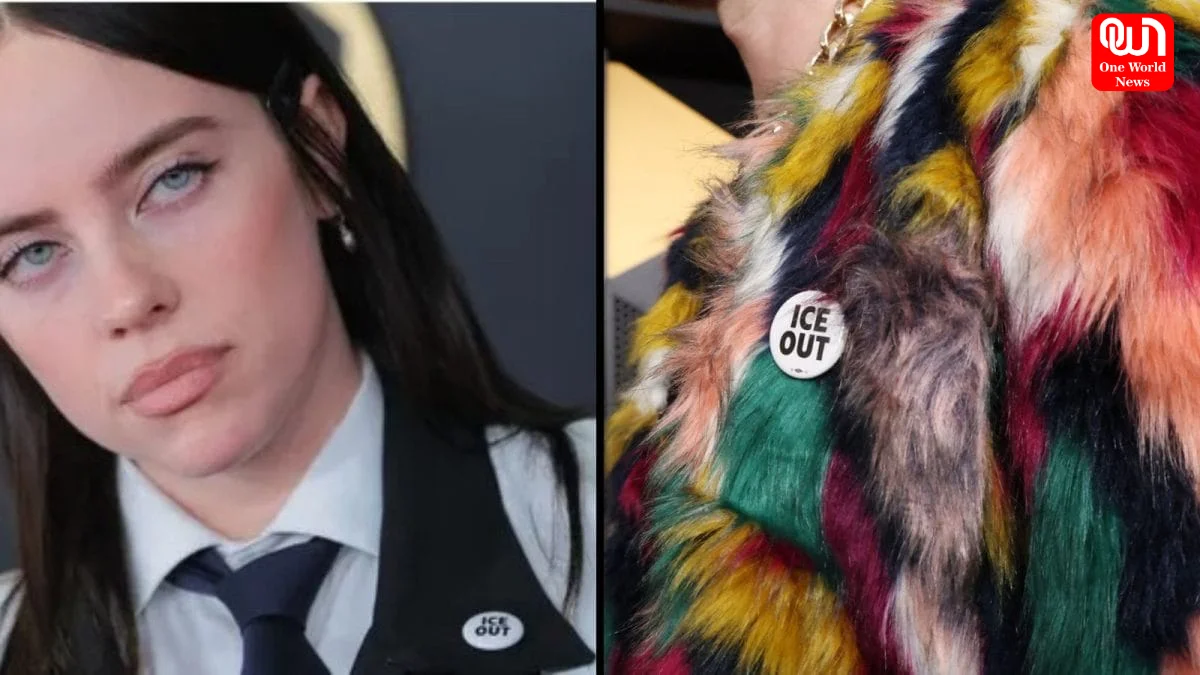
The activism at the Grammy Awards was not limited to words. Many artists and attendees wore pins that read “ICE OUT” on the red carpet — a clear visual protest against immigration enforcement actions. Celebrities including Kehlani, Billie Eilish, Bad Bunny, and others used fashion as a form of political expression, turning the event into a platform for solidarity with immigrant communities.
These symbolic gestures were accompanied by pointed speeches on stage. Kehlani, upon winning Best R&B Performance, vocally criticized the current immigration climate in the U.S., urging other artists to unite against injustice. Her call to collective action amplified the night’s themes of resistance and community.
Bad Bunny’s Message of Humanity
Bad Bunny, the Puerto Rican star who won Best Música Urbana Album, also made headlines with his speech. Before thanking collaborators and supporters, he opened with “ICE out,” reinforcing the night’s central theme of protest. He stressed the shared humanity of immigrants, stating, “We’re not savages, we’re not animals, we are humans and we are Americans.” His remarks resonated with many viewers and added another layer to the night’s political narrative.
This moment was especially significant as Bad Bunny made history at the Grammys, becoming the first Spanish-language artist to receive certain top awards — a milestone that further highlighted the cultural diversity and immigrant influence within the music industry.
A Broader Movement Beyond Music
The immigration debate at the Grammys reflected broader societal tensions and public outcry over federal immigration policies. Protest movements, community-led actions, and media criticism have intensified in recent years, particularly in response to enforcement practices and controversial leadership decisions. These dynamics have made immigration a deeply divisive topic in American public life — one that many artists clearly felt compelled to address.
Olivia Dean’s acceptance speech for Best New Artist also struck a personal chord. Dean spoke about her own immigrant heritage and honored the bravery of her ancestors. Her remarks underscored how deeply personal and emotional immigration issues are for many people, even within the entertainment community.
Read more: Geopolitics At Boarding Gate: Indian Tourist Footfall Slumps to Azerbaijan and Turkey
The Reaction: Support and Backlash
As expected with any politically charged moment in pop culture, reactions were mixed. While many fans and commentators praised the artists for using their platform to highlight human rights and immigrant issues, others argued that award shows should remain apolitical. Some critics questioned the relevance of music awards as venues for political debate, sparking a larger conversation about the role of artists in public life.
However, for advocates and supporters of immigrant communities, the Grammy Awards represented a rare and powerful moment of visibility. The combined voices of influential performers brought national attention to humanitarian concerns that might otherwise receive less coverage.
The Grammys’ Evolving Role
The 2026 Grammy Awards will be remembered not just for the music but for the unfiltered messages that emerged on one of entertainment’s biggest stages. The events of the night illustrated how cultural platforms can intersect with political movements — transforming what might first seem like entertainment into a forum for dialogue, protest, and reflection.
By bringing the immigration debate to the forefront, artists reaffirmed that the Grammy Awards are more than a celebration of music — they are part of the cultural conversation shaping society today.
We’re now on WhatsApp. Click to join.
Like this post?
Register at One World News to never miss out on videos, celeb interviews, and best reads.