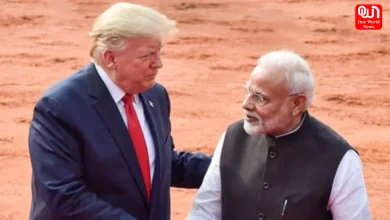
Has India Committed To Buying Products Worth $500 Billion From US? Piyush Goyal Explains
Piyush Goyal clarifies that while India aims to import $500 billion in US goods, it’s an aspirational goal, not a binding commitment under the trade deal.

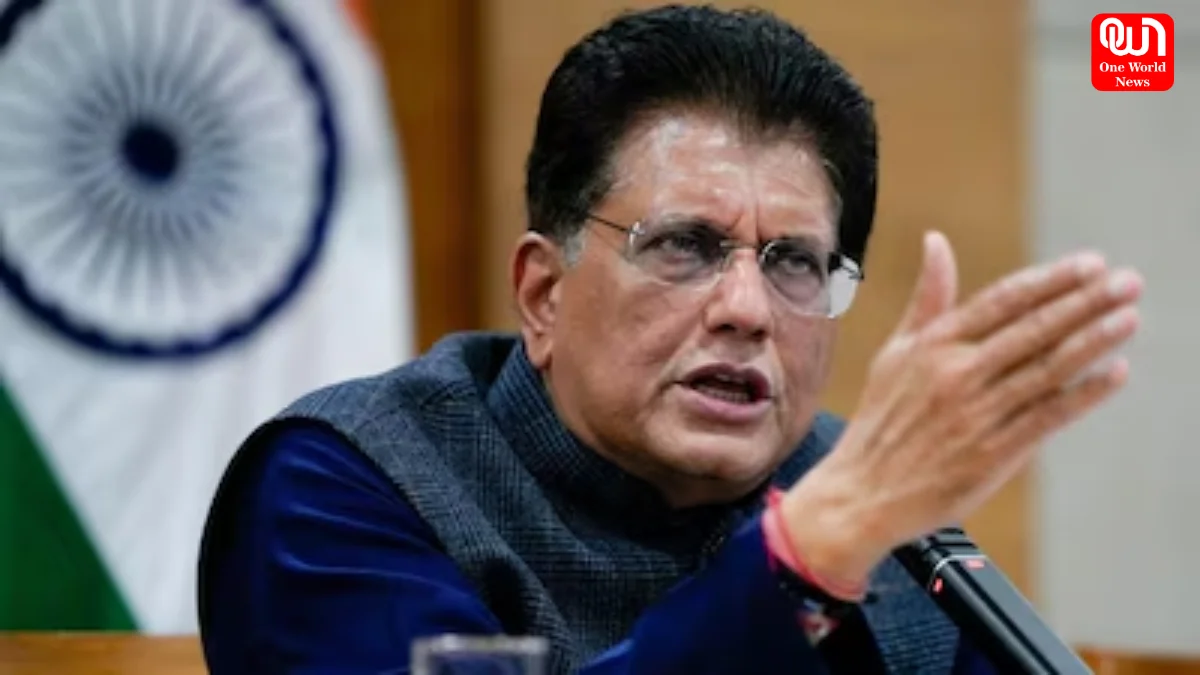
Has India Committed To Buying Products Worth $500 Billion From US? Piyush Goyal Explains Logistics and What It Really Means
In recent weeks, discussions around the India–United States trade framework have captured global attention, particularly the figure suggesting that India committed to buying products worth $500 billion from the US over the next five years. Headlines have raised questions about what this figure actually means, whether it constitutes a formal obligation, and how India might achieve such a number. Commerce and Industry Minister Piyush Goyal has stepped forward to clarify the context, intending to demystify the figure and explain the logistics behind it.
Read more: Political Roundup: Major Global and National Power Shifts on Feb 7, 2026
What the $500 Billion Figure Represents
Under the interim India–US trade framework, both sides laid out a vision of deepening economic ties. In this context, figures like $500 billion in US goods purchases have been mentioned as part of the broader goal of expanding trade between the two nations. However, Piyush Goyal has emphasized that this figure is not a binding commitment requiring India to compulsorily import that amount from the United States. Instead, it reflects an aspirational target that aligns with India’s projected demand for critical products such as energy, aviation equipment, technology, and industrial goods.
Goyal made it clear that India does not have a legal obligation to purchase $500 billion worth of products from the US, but rather the framework envisages that India’s growing economy and demand dynamics make such an amount feasible over a five-year horizon. He reiterated that trade decisions will continue to be driven by commercial viability and India’s economic requirements.
Why the Figure Is Seen as Achievable
Economists and trade analysts say that the $500 billion figure should be seen in light of trade flows that could naturally increase as India’s economy grows. Currently, India imports a significant volume of goods that are either produced elsewhere or not made domestically at scale. Goyal referenced sectors like aviation, energy, and high-tech equipment where either current orders or potential demand points toward large future purchases. One high-profile example includes discussions about deals for aircraft and related equipment, which alone could run into tens of billions of dollars.
In practical terms, India already sources around $300 billion worth of products from various global markets, some of which could shift toward US suppliers over time if conditions are competitive and commercially sensible. Goyal has described the $500 billion figure as “very conservative” for a rapidly expanding economy that is expected to grow significantly in the coming decade.
Strategic Trade Goals and Logistics
The emphasis on logistics and strategic planning comes from the broader objective of diversifying India’s trade partnerships and reducing dependence on single sources or regions for critical imports. In negotiations with the United States, India has sought to ensure that any trade framework not only opens US markets for Indian exports but also secures reliable access to high-quality goods that support India’s industrial and technological ambitions.
Unlike a strict contractual quota, the “commitment” to purchasing certain volumes of American products is tied to ongoing economic and supply needs. It reflects projected demand patterns rather than enforced quantities. Goyal has clarified that actual import volumes will depend on price competitiveness, supply chain logistics, and India’s domestic planning.
Reactions and Clarifications
The political narrative around this trade framework has drawn responses from various quarters. Opposition parties in India have called for greater transparency about the terms, suggesting that a high import figure might disadvantage domestic industries if not managed carefully. Meanwhile, proponents argue that the integration of US goods through preferential access, lower tariffs, and enhanced market pathways can benefit Indian consumers, manufacturers, and sectors such as aviation and energy.
Goyal has also reiterated that India has protected sensitive sectors, such as certain agricultural products, while making trade more accessible in areas that align with India’s broader economic priorities.
Read more: Political Roundup: Key Global Developments on Feb 8, 2026
A Growing Trade Relationship
Whether the eventual figure reaches $500 billion or evolves differently, the India–US trade relationship is clearly deepening. Reductions in tariffs, logistical alignments, and greater market access on both sides point toward a future where bilateral trade could expand beyond current levels. The idea behind citing an ambitious number like $500 billion is to set a strategic direction for cooperation and a framework that incentivizes growth for both economies.
Ultimately, India’s engagement with the United States regarding trade is driven by mutual interest, economic complementarity, and long-term strategic partnerships — not by rigid purchasing obligations. As logistics, tariffs, and market openings continue to evolve, the emphasis remains on strengthening cooperation while safeguarding national priorities.
We’re now on WhatsApp. Click to join.
Like this post?
Register at One World News to never miss out on videos, celeb interviews, and best reads.