Pakistan Army Feared Full-Scale Indian Attack During Operation Sindoor
Pakistan Army feared a multi-domain Indian assault during Operation Sindoor, triggering panic in Rawalpindi and exposing deep strategic insecurity.

Pakistan Army Feared Full-Scale Indian Attack During Operation Sindoor Amid Rising Strategic and Political Tensions
Operation Sindoor marked one of the most intense moments in recent India–Pakistan military history. According to information that has emerged, the Pakistan Army feared that India’s response would not remain limited and could escalate into a full-scale, multi-domain attack. This fear reportedly triggered anxiety within Pakistan’s military leadership, particularly at the General Headquarters in Rawalpindi.
The concern stemmed from India’s decisive and calibrated military posture following a deadly terror attack in Pahalgam. What initially appeared to Pakistan as a limited operation quickly began to look like a broader strategic shift.
Fear of a Multi-Domain Indian Offensive
The Pakistan Army anticipated that Operation Sindoor, launched by Indian defence forces, could expand beyond precision air strikes. Military planners reportedly feared an all-domain Indian assault involving air power, cyber warfare, covert operations, and precision ground strikes.
This anxiety was rooted in India’s evolving military doctrine, which emphasizes rapid escalation dominance without crossing conventional nuclear thresholds. For Rawalpindi, this represented a dangerous scenario where traditional deterrence assumptions might no longer hold.
The possibility that India could strike across domains while maintaining strategic restraint unsettled Pakistan’s military leadership deeply.
Panic Reaches the Top Leadership
The fear within military circles reportedly extended to Pakistan’s civilian leadership as well. During heightened tensions in May, President Asif Ali Zardari revealed publicly that he had been advised to move to a bunker.
According to his account, he was told that war had effectively begun following Indian precision strikes under Operation Sindoor. The recommendation to move the President to a secure location reflected the seriousness with which Pakistan’s leadership viewed the situation.
Zardari’s refusal to relocate was seen as symbolic, especially in a system where civilian leaders are often sidelined during national security crises.
Civil-Military Tensions Exposed
The bunker episode highlighted long-standing tensions between Pakistan’s civilian leadership and the military establishment. The recommendation to shield the President underscored the military’s perception of civilian authority as largely symbolic during conflict.
Zardari’s reported decision to stay put was interpreted by observers as an assertion of civilian legitimacy, a rare occurrence in Pakistan’s civil-military history. It exposed underlying mistrust and the fragile balance of power within the country’s governance structure during moments of crisis.
Internal Instability Adds to Military Anxiety
Beyond the immediate fear of Indian retaliation, the Pakistan Army was reportedly worried about internal vulnerabilities. Economic instability, public unrest, and potential provincial fractures added layers of concern.
Military planners feared that a sustained Indian offensive could exacerbate domestic instability, weakening Pakistan’s ability to manage both external and internal challenges simultaneously. The situation forced Rawalpindi to reassess its nuclear red-line calculations, especially amid concerns that India could operate below Pakistan’s assumed nuclear thresholds.
This recalibration revealed a deeper strategic uncertainty within Pakistan’s security establishment.
Reasd more: Who Is Dr K. Laxmi Bai? Veteran Doctor’s ₹3.4 Crore Donation to AIIMS for Women’s Cancer Treatment
Operation Sindoor and Its Impact
Operation Sindoor began in the early hours of May 7, when Indian defence forces launched precision strikes on terror camps in Pakistan and Pakistan-occupied Kashmir. The operation was a response to the Pahalgam terror attack that claimed 26 lives.
In its first phase, Indian forces targeted camps linked to major terror groups, dismantling infrastructure that had operated with relative impunity. The strikes reportedly eliminated over 100 terrorists, including close associates of key militant leadership.
When Pakistan attempted a retaliatory response, including plans to target Indian cities and installations, India escalated decisively.
Second Phase and Escalation
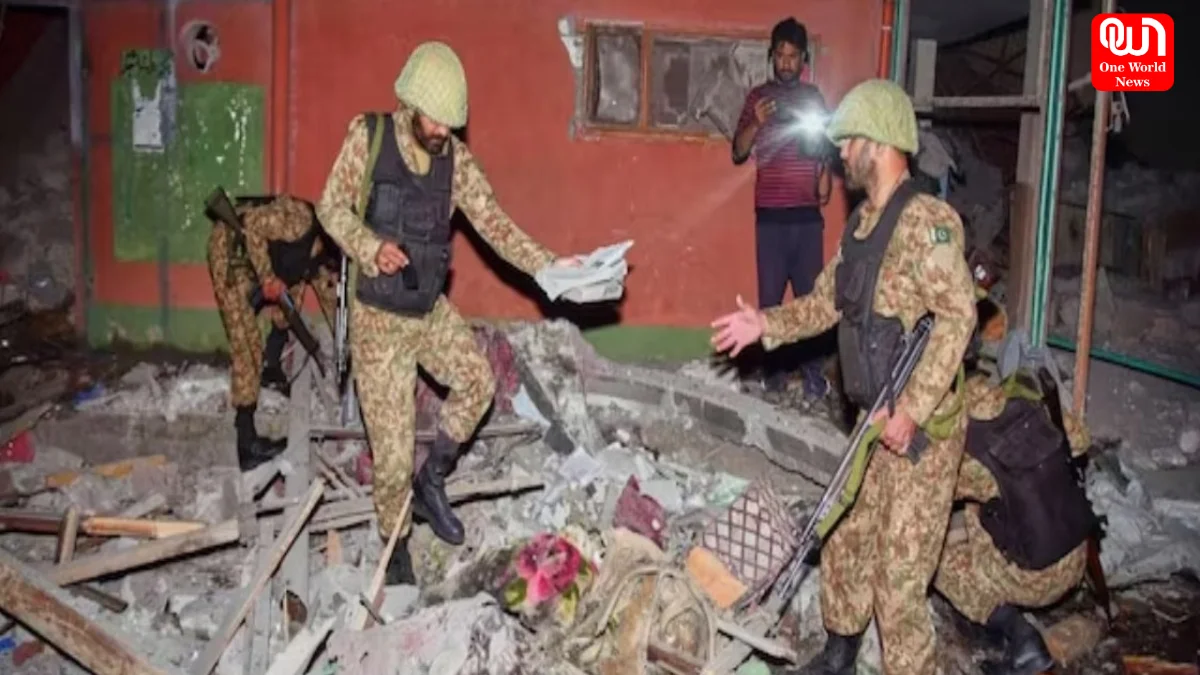
The second phase of Operation Sindoor, carried out on the night of May 9–10, marked a significant escalation. Indian forces struck multiple Pakistani airbases, including Nur Khan, Sargodha, Jacobabad, Murid, and Rafiqui.
These strikes inflicted damage that Pakistan has struggled to publicly acknowledge. The escalation led to four days of intense cross-border fighting involving fighter jets, missiles, and artillery, pushing both nations to the edge of a wider conflict.
For the Pakistan Army, this phase confirmed fears that India was willing to raise the costs dramatically while remaining within controlled escalation.
Strategic Insecurity Revealed
More than a tactical confrontation, Operation Sindoor exposed deeper strategic insecurities within Pakistan’s military establishment. The fear was not only of military defeat, but of narrative dominance, information warfare, and the erosion of long-held deterrence assumptions.
Read more: Delhi As Air Quality Slips Back to ‘Very Poor’, AQI at 355
The episode revealed a lack of confidence in Pakistan’s political system under stress and highlighted the challenges faced by its military leadership in managing both perception and power.
Conclusion
The fear of a full-scale Indian attack during Operation Sindoor was a defining moment for the Pakistan Army. It underscored shifting regional power dynamics and exposed vulnerabilities in Pakistan’s military and political structures.
As South Asia continues to navigate a volatile security environment, Operation Sindoor stands as a reminder that modern conflicts are no longer limited to borders or battlefields — they unfold across domains, narratives, and institutions simultaneously.
We’re now on WhatsApp. Click to join.
Like this post?
Register at One World News to never miss out on videos, celeb interviews, and best reads.