Dutch Minister Backs India-EU Trade Deal, Pushes Tech and Trade Cooperation
India-EU Trade Deal gains momentum as Dutch foreign minister backs free trade, tech cooperation, and deeper strategic ties with India.

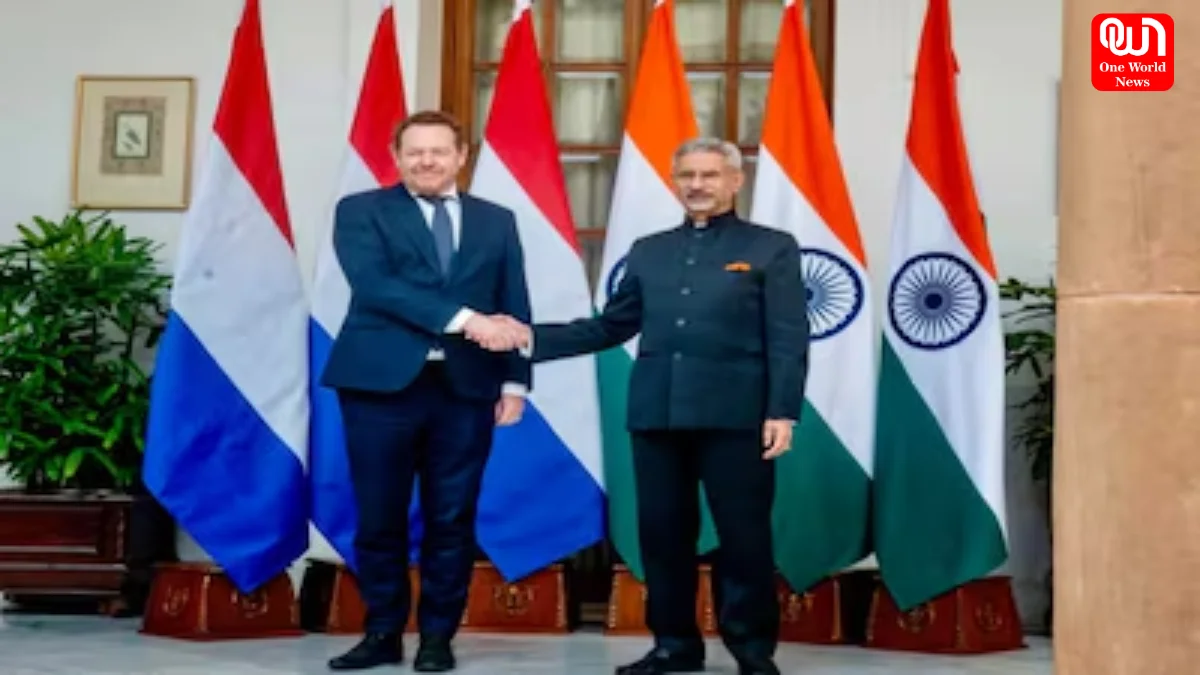
Visiting Dutch Minister Backs India-EU Trade Deal, Rejects Protectionism and Signals Deeper Strategic Partnership
The recent two-day visit of the Dutch foreign minister to India on December 18–19 has signalled a significant shift in the trajectory of India-Netherlands relations. Described as a move toward a “next-level” partnership, the visit focused on expanding cooperation beyond traditional sectors into high technology, defence, and global trade resilience.
At the heart of these discussions was strong backing for the India-EU Trade Deal, which the minister described as crucial in an increasingly uncertain global economic environment.
Read mmore: Political Roundup: Today’s Key Global Political Developments
Beyond Traditional Cooperation: A Strategic Reset
Historically, India and the Netherlands have collaborated closely in areas such as agriculture, water management, and sustainability. While these remain important, the recent visit reflected a conscious effort to broaden the scope of engagement.
Discussions in New Delhi and Mumbai highlighted emerging sectors such as semiconductors, digital technology, cyberspace, life sciences, and defence manufacturing. This strategic reset reflects changing global priorities, where technology and supply-chain security have become central to national and economic resilience.
Democracy, Intolerance, and Shared Values
In public remarks and interviews, the Dutch minister emphasized that shared democratic values form the foundation of the bilateral relationship. He noted that as two major democracies, India and the Netherlands must be able to engage in open and honest dialogue about internal challenges.
Touching on issues such as intolerance, migration, and refugee pressures, he argued that democracies must clearly define what forms of intolerance they cannot accept. His comments reflected a broader European concern about social cohesion while reinforcing the idea that democratic integrity is essential for innovation, stability, and long-term partnerships.
He also expressed condolences over the April terror attack in Pahalgam, underlining the shared security concerns faced by democratic nations.
Read more: 8 Elephants Killed as Rajdhani Express In Assam Derails After Collision
Technology and Semiconductors: Betting on India’s Strengths
A major highlight of the visit was the focus on semiconductor cooperation. The Dutch minister underscored India’s growing importance as a global technology hub, pointing to its large, skilled, and highly educated workforce.
He praised India’s demographic advantage and emphasized that talent availability is a key reason why Dutch technology firms are expanding operations in the country. A visit to a major semiconductor facility in Noida served as an example of how the Netherlands is already contributing to production capacity and skills development in India.
Indian leadership echoed this optimism, noting that the partnership is entering a more ambitious phase involving advanced digital technologies and future-oriented industries.
Backing Free Trade, Rejecting Protectionism
One of the most politically significant aspects of the visit was the minister’s clear stance on global trade policy. Addressing concerns about rising protectionism, he reaffirmed the Netherlands’ commitment to free trade principles.
Rejecting tariff-heavy approaches to global commerce, he stressed that open trade has been central to Dutch economic success and remains vital for global growth. In this context, he strongly backed the India-EU Trade Deal, describing it as being in a decisive phase.
According to the minister, trade agreements with like-minded partners are now more important than ever to ensure resilient, diversified, and autonomous supply chains. The India-EU Trade Deal, he suggested, could play a key role in stabilizing global trade amid geopolitical uncertainty.
Defence Cooperation and Strategic Security
The visit also resulted in concrete outcomes in the defence sector. A Letter of Intent on Defence Cooperation was signed, laying the groundwork for joint development and co-production of niche military technologies.
Particular emphasis was placed on maritime security, an area of growing importance given global shipping routes and regional stability concerns. The agreement signals a move toward deeper strategic trust and long-term defence collaboration.
Looking Ahead: A Tech-Driven Future
The visit is widely seen as a precursor to the Dutch prime minister’s scheduled trip to India in February 2026 for the AI Impact Summit. That visit is expected to bring a large delegation of Dutch business leaders, further strengthening technology and innovation ties.
With strong backing for the India-EU Trade Deal, expanding semiconductor cooperation, and growing defence collaboration, the India-Netherlands relationship appears poised for sustained strategic growth.
Conclusion
The Dutch foreign minister’s visit marks a clear shift toward a future-focused partnership built on technology, trade, and shared democratic values. By endorsing the India-EU Trade Deal and rejecting protectionist trade policies, the Netherlands has positioned itself as a strong advocate for deeper India-EU economic integration.
As global trade and security dynamics continue to evolve, such partnerships may prove essential in shaping a more resilient and cooperative international order.
We’re now on WhatsApp. Click to join.
Like this post?
Register at One World News to never miss out on videos, celeb interviews, and best reads.