
Hindu-Owned House Torched In Bangladesh Amid Rising Attacks on Minorities
Hindu-Owned House Torched In Bangladesh highlights growing mob violence against minorities amid political unrest and rising insecurity.

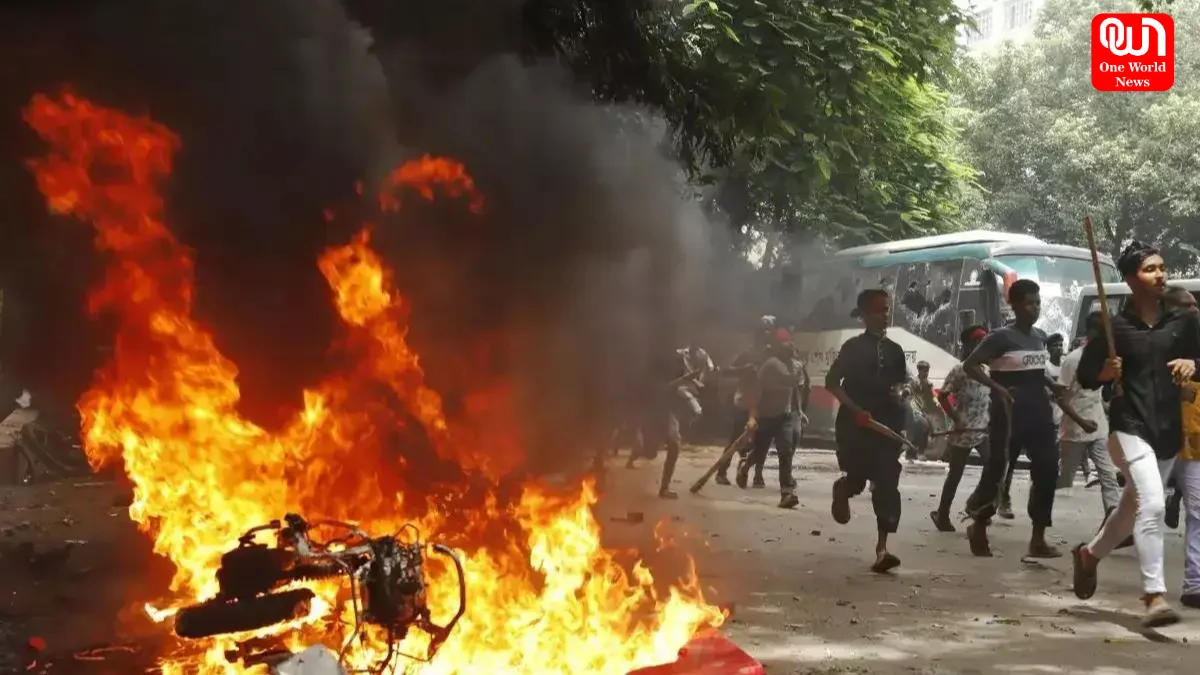
Hindu-Owned House Torched In Bangladesh as Mob Violence Against Minorities Escalates Amid Political Unrest
The incident of a Hindu-Owned House Torched In Bangladesh has once again drawn attention to the growing insecurity faced by religious minorities in the country. The attack occurred in Dumritola village in the Pirojpur district, where unidentified miscreants allegedly set fire to several rooms of a Hindu family’s residence in the early hours of December 27.
According to reports, the attackers inserted a cloth into one of the rooms and ignited it, causing the flames to spread rapidly throughout the house. The incident is being described as a targeted act of violence rather than an accidental fire, intensifying fears among minority communities already living under heightened tension.
Targeted Attack in Pirojpur
The house belonged to the Saha family, a Hindu household in the rural village of Dumritola. Multiple rooms were destroyed in the blaze, leaving the family with significant property damage. Fortunately, no fatalities were reported in this particular incident, but the psychological impact has been severe.
The timing of the attack — during the early morning hours while residents were asleep — has raised alarm. Human rights observers note that such timing suggests intent to cause maximum harm, possibly even loss of life, rather than mere destruction of property.
Repeated Pattern of Violence
This case of a Hindu-Owned House Torched In Bangladesh is not an isolated event. Just days earlier, another Hindu-owned home near the southeastern port city of Chattogram was set on fire in a similar manner. In that incident, attackers allegedly locked the family inside their home before setting it ablaze.
Eight members of two families were trapped but managed to escape by cutting through tin sheets and bamboo fencing. Although they survived, their belongings were destroyed, and their pets were reportedly killed in the fire. Police later arrested five suspects, while investigations to identify additional perpetrators continued.
Threat Messages and Intimidation
Authorities recovered a threatening message written in Bengali following the Chattogram attack. The message accused Hindus of acting “against Islam and the Muslim community” and warned that homes, businesses, and properties belonging to non-Muslims would “not be spared” if such alleged actions continued.
Such messages have fueled fear among minority groups and raised concerns about organized intimidation campaigns. Rights groups warn that these threats are contributing to a climate of fear, encouraging silence and displacement among vulnerable communities.
Read more: Delhi As Air Quality Slips Back to ‘Very Poor’, AQI at 355
Wider Arson Campaign in Raozan
According to local media reports, houses belonging to at least seven Hindu families were set ablaze across three locations in the Raozan area within a span of five days. Police acknowledged a broader pattern of arson and held meetings with local community leaders to promote interfaith harmony and social vigilance.
Despite these efforts, minority leaders argue that reactive measures are insufficient and that stronger preventive action is needed to deter future violence.
Political Unrest and Rising Extremism
The surge in violence follows nationwide unrest triggered by the shooting of youth leader Sharif Osman Hadi on December 12. He later died while receiving treatment abroad, sparking protests across Bangladesh. Thousands of supporters vandalized media houses, while mob violence spread to multiple regions.
During this period, a Hindu factory worker was brutally lynched and his body set on fire over alleged blasphemy, triggering international condemnation. Another Hindu man was killed in a separate mob attack over an extortion allegation.
Observers note that political instability has created an environment where extremist elements feel emboldened. Analysts describe the current situation as a dangerous mix of anger, misinformation, and weakened law enforcement.
Government Response and Concerns
The interim administration has issued statements condemning violence, asserting that allegations or differences of belief can never justify mob justice. Officials have emphasized that no individual has the right to take the law into their own hands.
However, critics argue that condemnations alone are not enough. They point to what they describe as a growing political vacuum that has allowed radical forces to gain influence at the local level, particularly targeting minorities during moments of unrest.
A Climate of Fear for Minorities
The repeated incidents of a Hindu-Owned House Torched In Bangladesh underscore a deeper crisis facing religious minorities. Many families now live in fear, unsure whether their homes and lives will be protected.
Human rights advocates are calling for stronger accountability, swift justice, and long-term measures to ensure minority safety. Without decisive action, they warn, such violence risks becoming normalized.
Read more: Who Is Dr K. Laxmi Bai? Veteran Doctor’s ₹3.4 Crore Donation to AIIMS for Women’s Cancer Treatment
Conclusion
The torching of Hindu-owned homes in Bangladesh reflects more than isolated criminal acts — it signals a troubling erosion of social harmony during a time of political uncertainty. As unrest continues, the safety of minority communities remains a pressing concern.
Ensuring justice, restoring trust, and preventing further violence will be critical to safeguarding Bangladesh’s social fabric and upholding the rights of all its citizens.
We’re now on WhatsApp. Click to join.
Like this post?
Register at One World News to never miss out on videos, celeb interviews, and best reads.