
Gurugram’s New ‘Automatic’ Garbage Machine Goes Viral, Internet Asks ‘Where’s the Automation?’
Gurugram street cleaning sparks debate as a suction machine goes viral, with residents questioning automation, waste management and urban sanitation.

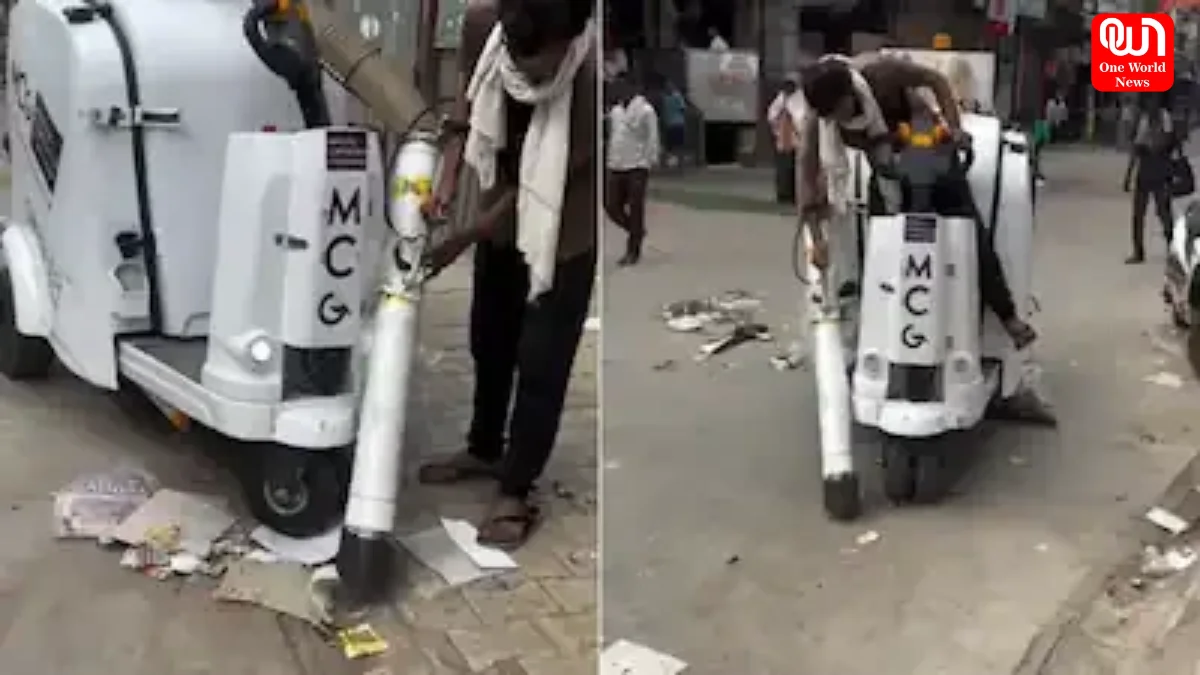
Gurugram Street Cleaning: New Automatic Garbage Suction Machine Goes Viral, Raising Questions About Waste Management and Urban Sanitation
Gurugram’s latest street-cleaning initiative has caught the internet’s attention, but not entirely for the reasons civic authorities might have expected. A newly introduced garbage-cleaning machine, promoted as part of the city’s efforts to improve sanitation, has gone viral on social media, prompting residents to question how much automation it actually offers.
The discussion gained momentum after a video showing the machine operating on a street circulated online. Instead of focusing only on its cleaning capabilities, many viewers began asking a simple question: Where is the automation?
The viral discussion comes amid ongoing efforts by the Municipal Corporation of Gurugram (MCG) to improve garbage collection, street cleaning and public hygiene across the city.
According to a September 27 report, the Municipal Corporation of Gurugram has started a pilot project involving five litter-picker machines to improve cleanliness in busy markets and public areas.
The machines are intended to collect roadside litter in locations where heavy pedestrian movement makes conventional cleaning challenging. The initial trial includes areas such as Sadar Bazaar and the premises around Sheetla Mata Temple.
Reportedly, each machine has a waste-holding capacity of approximately 650 litres. Once filled, the collected garbage can be emptied at a designated location.
The initiative is part of a broader push towards mechanised street cleaning and improved urban sanitation. However, the viral reaction suggests that residents are interested in understanding not just the machinery itself, but also its practical performance on everyday streets.
Why Is the Suction Machine Going Viral?
The machine’s online popularity has been driven by questions about its actual cleaning performance and the meaning of automation in municipal services.
In discussions on Reddit’s Gurgaon community, users shared mixed reactions to the cleaning equipment. Some questioned whether the machine could effectively collect larger pieces of litter, while others suggested that it might be more suitable for dust, leaves and smaller debris.
Several commenters also raised concerns about the availability of public dustbins, waste segregation and the continued practice of dry sweeping. These are individual online reactions rather than verified technical assessments of the equipment.
The debate highlights a distinction between introducing mechanised equipment and achieving measurable improvements in street cleanliness.
For residents, the real test is whether the machine can consistently remove waste from public spaces without creating additional cleaning challenges.
Gurugram Street Cleaning: A Larger Waste Management Challenge
Gurugram has been expanding its mechanised cleaning efforts as part of its strategy to address roadside dust, garbage accumulation and environmental concerns.
In June 2026, reports stated that the civic body planned to increase its fleet of mechanical road sweepers to 35 machines. At the time, MCG reportedly had 20 machines, with another 15 proposed through a tendering process. The initiative was intended to improve road cleanliness and help control dust pollution.
Separately, a five-year mechanised cleaning proposal worth approximately ₹450 crore was reported in July 2026. The proposed plan included road-sweeping equipment and additional sanitation workers, subject to government approval.
These developments indicate that Gurugram’s waste management strategy involves more than one type of machine. Different equipment serves different purposes, including collecting litter, sweeping roads and addressing accumulated dust.
Read more: Three-Day Bank Strike Deferred At The Last Moment: Here’s What Changed On Sunday
Can Automation Solve Gurugram’s Garbage Problem?
Introducing a suction machine or litter picker can support street cleaning, but equipment alone cannot address every aspect of urban sanitation.
Effective waste management requires coordination between municipal authorities, sanitation workers, residents and waste-processing agencies.
Some important factors include:
1. Proper Waste Segregation
Separating wet waste, dry waste and recyclable materials at the source can make collection and processing more organised.
2. Accessible Public Dustbins
Residents have raised concerns online about insufficient or poorly maintained public dustbins. Providing suitable disposal facilities can help reduce littering in busy areas.
3. Regular Machine Maintenance
Cleaning equipment needs routine servicing, trained operators and suitable operating procedures to remain effective.
4. Consistent Monitoring
Municipal authorities need to evaluate whether machines are collecting waste efficiently and whether the cleaned areas remain hygienic after operations.
5. Public Participation
Responsible disposal of wrappers, plastic waste and other litter remains an important part of maintaining clean streets.
Urban Sanitation Needs More Than Modern Equipment
The viral discussion surrounding Gurugram’s new cleaning machine reflects broader public interest in municipal accountability and the effectiveness of civic infrastructure.
On September 25, 2026, Haryana’s Swachh Bharat Mission (Urban) task force reviewed Gurugram’s sanitation arrangements, including door-to-door garbage collection, waste processing, legacy waste management and sweeping operations. Officials were directed to strengthen monitoring and take corrective measures where deficiencies were identified.
This wider focus is important because urban sanitation depends on an integrated system rather than a single piece of equipment.
A machine may collect litter from a particular stretch of road, but maintaining cleanliness requires regular collection schedules, proper disposal facilities and effective waste processing.
What Happens Next?
The performance of Gurugram’s litter-picker machines during the pilot project will be an important factor in determining their practical value for busy public spaces.
Read more: AAP Donor List Out: CJP’s Ashutosh Ranka Gave Rs 21,100; Data Shows Party Donations Fell 68%
Residents will likely continue evaluating the initiative through visible improvements in cleanliness, the condition of public areas and the consistency of municipal services.
The viral reaction has also brought attention to an important question surrounding modern civic infrastructure: does introducing new technology automatically translate into better public services?
For Gurugram, the answer will depend on how effectively mechanised cleaning is integrated with everyday waste management practices.
Ultimately, the success of the city’s street-cleaning initiative will be measured not by how advanced its equipment appears, but by whether residents experience cleaner roads, better-managed garbage and improved urban sanitation.
We’re now on WhatsApp. Click to join.
Like this post?
Register at One World News to never miss out on videos, celeb interviews, and best reads.