Delimitation Explained: Why It’s Becoming a Political Flashpoint in India
Delimitation explained: Why Centre vs Southern States conflict is rising over delimitation and its impact on political representation in India.

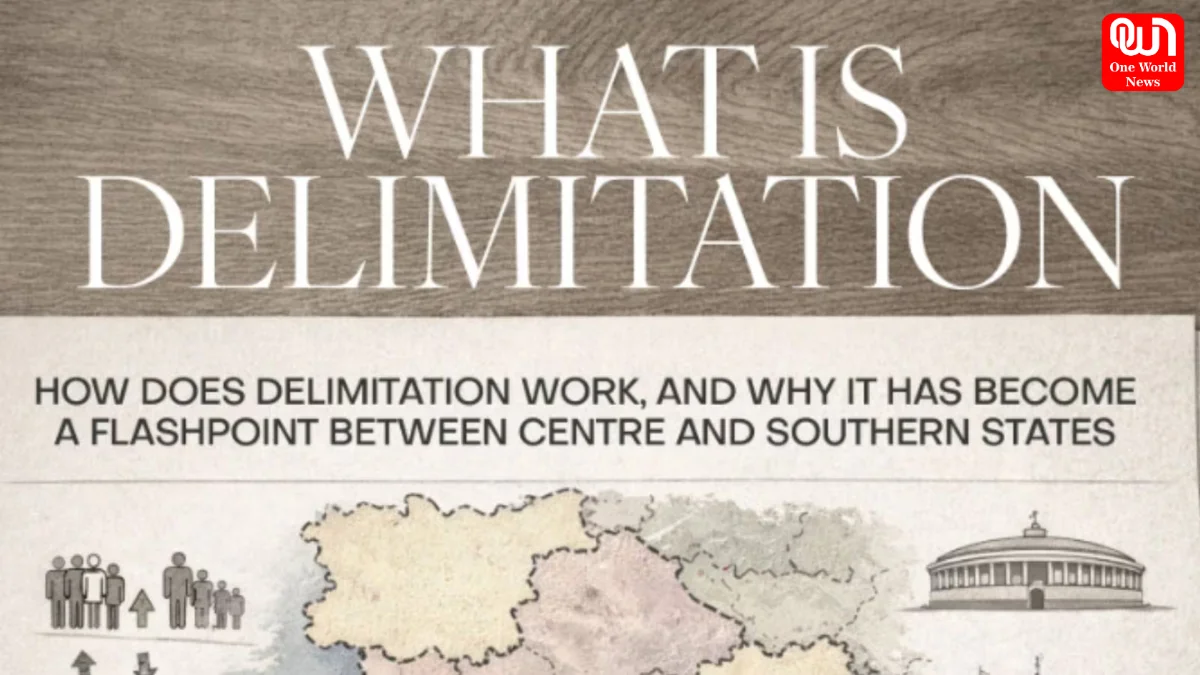
What Is Delimitation? Understanding the Growing Tension Between the Centre and Southern States Over Delimitation in India
Delimitation is a constitutional process in India that involves redrawing the boundaries of electoral constituencies based on changes in population. Its primary objective is to ensure fair representation so that each elected representative speaks for roughly an equal number of citizens. In simple terms, delimitation adjusts political maps to reflect demographic realities.
This process is carried out by a Delimitation Commission, an independent body whose decisions have the force of law and cannot be challenged in court. The last delimitation exercise in India was conducted based on the 2001 Census, but its implementation has been frozen until after 2026. The upcoming delimitation exercise, expected after the next Census, is now at the center of an intense political debate.
Why Is Delimitation Important?
India follows the principle of “one person, one vote, one value.” However, population growth is uneven across states. Some states have grown rapidly, while others have successfully controlled population growth through effective policies.
Delimitation ensures that:
- Constituencies have roughly equal populations
- Representation in Parliament remains fair
- Democracy reflects current demographic realities
Without delimitation, some constituencies may have far more voters than others, leading to unequal representation.
The Core Issue: Population vs Representation
The controversy arises from how delimitation is linked to population. Northern states like Uttar Pradesh, Bihar, and Madhya Pradesh have experienced higher population growth compared to southern states such as Tamil Nadu, Kerala, Karnataka, and Andhra Pradesh.
If seats in the Lok Sabha are redistributed purely based on current population:
- Northern states would gain more seats
- Southern states would lose relative representation
This creates a paradox. Southern states, which implemented population control measures effectively, may now face reduced political influence as a result of their success.
Read more: World Food Safety Day 2026
Why Southern States Are Concerned
Southern states argue that delimitation based strictly on population would penalize them unfairly. Their concerns include:
1. Loss of Political Voice
States like Tamil Nadu and Kerala fear losing seats in Parliament or having their influence diluted. This could reduce their bargaining power in national policymaking.
2. Rewarding High Population Growth
Leaders in the South argue that states with poor population control would effectively be rewarded with more representation.
3. Fiscal Imbalance
Southern states already contribute significantly to the national economy and tax pool. Reduced representation could weaken their ability to negotiate fair financial allocations.
The Centre’s Perspective
The central government has not formally announced the exact framework for the next delimitation, but it maintains that representation must reflect population realities. From this viewpoint:
- Democracy requires equal representation per citizen
- Growing populations must be adequately represented
- Delimitation is a constitutional necessity, not a political choice
However, the lack of clarity has added to the anxiety among southern states.
Historical Context
India froze the allocation of Lok Sabha seats in 1976 (during the Emergency) to encourage population control. This freeze was later extended until 2026. The idea was to prevent states from being penalized for successfully reducing fertility rates.
Now that the freeze is nearing its end, the country faces a critical decision: how to balance population-based representation with fairness across regions.
Possible Solutions
Several ideas have been suggested to address the growing conflict:
1. Increasing Total Seats
Instead of redistributing existing seats, the total number of Lok Sabha seats could be increased. This would allow growing states to gain representation without reducing seats for others.
2. Weighted Representation
Some experts propose a hybrid model where factors beyond population—such as development indicators—are also considered.
3. Federal Safeguards
Ensuring stronger roles for states in decision-making bodies like the Rajya Sabha could help balance power.
Why It Has Become a Flashpoint
Delimitation is no longer just a technical exercise—it has become a political flashpoint because it touches on:
- Regional identity
- Economic contribution vs political power
- Federal balance between Centre and states
Southern leaders have openly voiced concerns, framing the issue as one of fairness and equity. Meanwhile, the Centre faces the challenge of upholding democratic principles without alienating key regions.
Read more: World Caring Day 2026: Spreading Kindness, Compassion, and Human Connection
The Road Ahead
As India approaches its next delimitation exercise, the stakes are high. The decisions made will shape the country’s political landscape for decades. Striking a balance between population-based representation and regional fairness will be crucial.
Delimitation, at its core, is about ensuring democracy remains representative. But in a diverse country like India, it must also remain inclusive and equitable. The coming years will test how well the nation can manage this delicate balance without deepening regional divides.
We’re now on WhatsApp. Click to join.
Like this post?
Register at One World News to never miss out on videos, celeb interviews, and best reads.