First Pictures of SpaceX Falcon 9 Rocket Crashing into the Moon Are Here
First SpaceX rocket moon crash images released! See Falcon-9 moon crash pictures, impact details, Elon Musk updates, and latest science news.

First Pictures of SpaceX Falcon 9 Rocket Crashing into the Moon Revealed: Scientists Capture Rare Lunar Impact of SpaceX Falcon 9 Stage
The first-ever Moon crash pictures showing the aftermath of a SpaceX rocket moon crash have finally been released, offering scientists and space enthusiasts a fascinating look at an unexpected event on the lunar surface. A discarded upper stage of a SpaceX Falcon 9 rocket, launched during a 2025 lunar mission, unintentionally struck the Moon at an incredible speed, creating a fresh impact crater and scattering lunar dust across the surrounding area. The event has become one of the biggest science news stories of the year and has attracted worldwide attention, including coverage from India Today Science.
Read more: Sony FX5 Cinema Camera Launches with Open Gate Recording for Professional Filmmakers
What Happened to the SpaceX Falcon 9 Rocket?
The rocket involved was not an active spacecraft but the upper stage of a Falcon 9 launch vehicle that had been drifting through space after completing its mission. Over time, gravitational forces from the Earth, Moon, and the Sun gradually altered its orbit, eventually placing it on a collision course with the Moon.
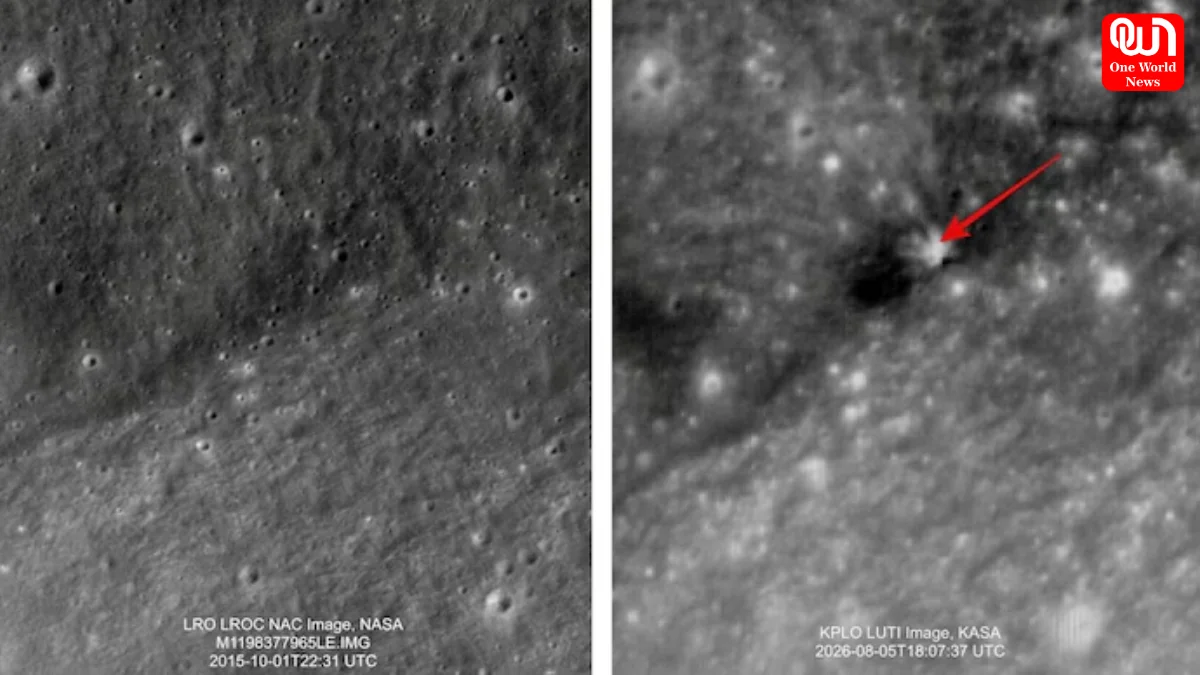
Scientists had predicted the impact days in advance, and on August 5, 2026, the approximately four-ton rocket stage slammed into the lunar surface at nearly 8,700 km/h near the Einstein Crater on the Moon’s western side.
First Moon Crash Pictures Released
The newly released falcon-9 moon crash pictures provide before-and-after views of the impact site. South Korea’s Danuri lunar orbiter successfully captured the first images showing the newly formed crater and darker material spread around the collision zone.
Ground-based observatories also detected a bright flash at the moment of impact and recorded a cloud of lunar dust rising above the surface. These observations give researchers valuable information about how impacts affect the Moon’s surface and how debris behaves in the Moon’s low-gravity environment.
Why These SpaceX Rocket Pictures Matter
The released spacex rocket pictures are much more than dramatic photographs. They provide scientists with a rare opportunity to study:
- Formation of fresh lunar craters
- Behavior of lunar dust after high-speed impacts
- Surface composition beneath the Moon’s outer layer
- Impact physics involving artificial space objects
Unlike natural meteorite impacts, researchers already knew the rocket’s size, speed, and composition, making this event extremely valuable for scientific analysis.
Was This Crash Planned?
No. The spacex rocket crash on the Moon was completely unintentional.
After completing its mission, the Falcon 9 upper stage remained in space because it did not have enough fuel to return safely or move into a stable disposal orbit. Over several months, changing gravitational forces slowly redirected the rocket toward the Moon.
Experts say there was never any danger to Earth or future lunar missions, but the incident highlights the growing challenge of tracking space debris beyond Earth’s orbit.
What Did Scientists Discover?
Early analysis of the impact suggests the collision created a new crater measuring several meters across while ejecting a large plume of lunar material.
Scientists are now comparing observations from multiple telescopes and spacecraft to understand:
- How deep the impact penetrated
- Amount of material thrown into space
- Changes in nearby lunar terrain
- Properties of underground lunar rock
NASA and other international space agencies are expected to continue studying the impact site over the coming weeks.
Elon Musk and SpaceX Response
Although Elon Musk has not treated the event as a mission failure, the incident has renewed discussions about managing discarded spacecraft and rocket stages during future deep-space missions.
As more lunar exploration missions are launched by governments and private companies, experts believe better tracking and disposal strategies will become increasingly important to reduce unintended impacts on the Moon.
Why This Is Important for Future Space Exploration
The SpaceX rocket moon crash demonstrates both the opportunities and challenges of modern space exploration. While the collision itself was accidental, it has produced valuable scientific data that would have been difficult to obtain through planned experiments.
Researchers now have fresh evidence that will improve computer models of lunar impacts, assist future Moon missions, and help scientists better understand how the Moon’s surface evolves over time.
With renewed global interest in returning humans to the Moon, events like this will shape future policies on spacecraft disposal and orbital planning. The newly released Moon crash pictures and falcon-9 moon crash pictures will remain an important part of lunar research and one of the most talked-about science news stories covered by India Today Science and other leading publications.
We’re now on WhatsApp. Click to join.
Like this post?
Register at One World News to never miss out on videos, celeb interviews, and best reads.