‘PM Can Be Trusted’: Centre Defends 2023 Law on Election Commission Appointments Before Supreme Court
Centre defends the 2023 law on Election Commission appointments as Supreme Court examines CJI's exclusion from the CEC selection panel.

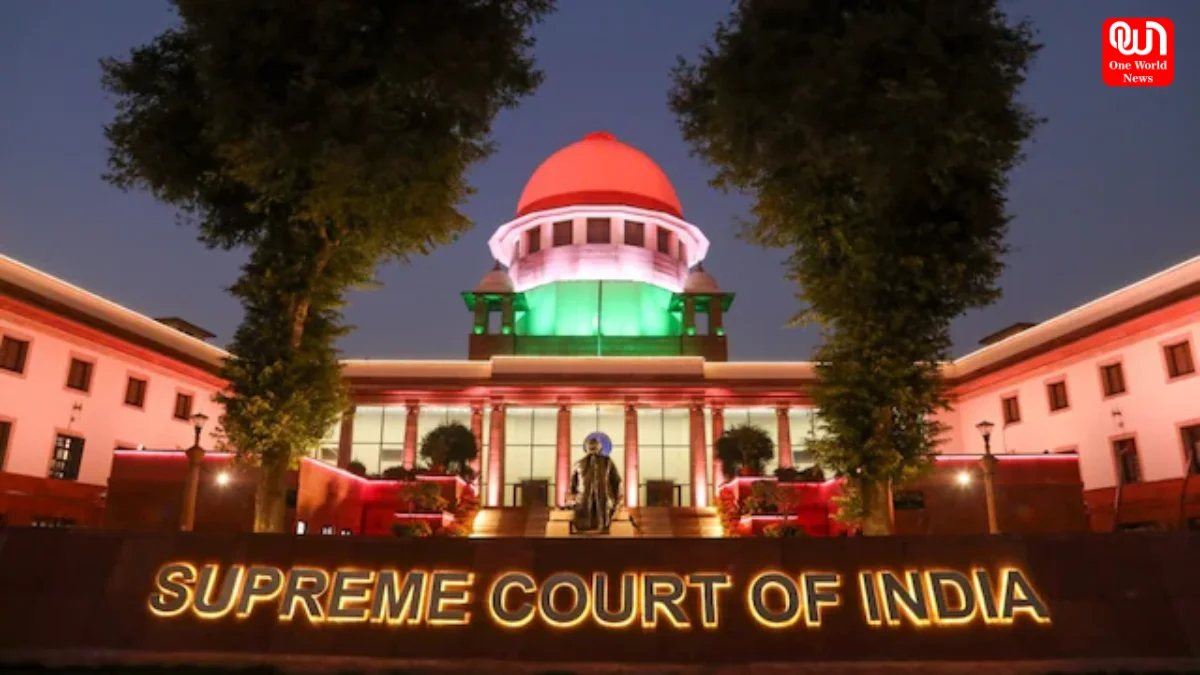
‘PM Can Be Trusted’: Centre Tells Supreme Court Why CJI Was Excluded From Election Commission Appointments Selection Panel Under 2023 Law
The debate over Election Commission appointments once again took center stage as the Supreme Court heard petitions challenging the 2023 law governing the appointment of the Chief Election Commissioner (CEC) and Election Commissioners. During the hearing, the Centre strongly defended the current appointment process, arguing that the Prime Minister’s role in the Selection panel should not be viewed with suspicion.
Solicitor General Tushar Mehta told the court that it would be incorrect to assume that the Prime Minister would act against democratic principles. The Centre maintained that constitutional offices deserve trust and that Parliament’s decision to frame the 2023 law should not be questioned without strong constitutional grounds.
What Is the Case About?
The case revolves around the constitutional validity of the 2023 law, officially known as the Chief Election Commissioner and Other Election Commissioners (Appointment, Conditions of Service and Term of Office) Act.
Under this law, Election Commission appointments are made by the President based on the recommendation of a Selection panel consisting of:
- The Prime Minister
- A Union Cabinet Minister nominated by the Prime Minister
- The Leader of the Opposition in the Lok Sabha
Notably, the CJI is not part of this committee, a decision that has been challenged before the Supreme Court by several petitioners.
read more: 30 July Veronica Gold Update: Gold and Silver Prices Today Remain Stable Across India
Why Is the Supreme Court Hearing the Matter?
The Supreme Court is examining whether excluding the CJI from the Selection panel compromises the independence of the CEC and other Election Commissioners.
During the hearing, the bench questioned why Parliament chose to exclude the Chief Justice when similar high-level appointments, such as those of the CBI Director and Lokpal members, involve judicial participation. The judges emphasized that public confidence in the Election Commission depends not only on actual fairness but also on the appearance of fairness.
Centre Defends the 2023 Law
Defending the legislation, the Centre argued that constitutional trust should be placed in elected representatives, particularly the Prime Minister.
Solicitor General Tushar Mehta submitted that questioning the Prime Minister’s integrity merely because the government holds a numerical majority on the Selection panel would undermine democratic institutions. He stated that assuming bad faith on the part of the executive was both unfair and constitutionally unsound.
The Centre also argued that Parliament has the authority to enact laws regulating Election Commission appointments, and courts should respect legislative wisdom unless a clear constitutional violation is established.
The Background of the 2023 Law
The controversy traces back to a landmark Supreme Court judgment in March 2023.
At that time, a Constitution Bench ruled that until Parliament enacted a law, the CEC and Election Commissioners should be appointed by a committee comprising:
- The Prime Minister
- The Leader of the Opposition
- The CJI
Later in December 2023, Parliament enacted the 2023 law, replacing the CJI with a Union Cabinet Minister nominated by the Prime Minister. This effectively changed the composition of the Selection panel, giving the executive two members on the committee.
Concerns Raised by Petitioners
Those challenging the 2023 law argue that excluding the CJI weakens the independence of Election Commission appointments.
According to the petitioners, the Election Commission plays a crucial role in conducting free and fair elections, making it essential that the appointment process remains insulated from excessive executive influence.
They contend that judicial participation provides an additional layer of neutrality and enhances public confidence in the appointment of the CEC and other Election Commissioners.
Supreme Court’s Observations
During the proceedings, the Supreme Court clarified that the issue was not about distrusting the Prime Minister personally.
Instead, the bench observed that the appointment process should visibly demonstrate fairness. The judges remarked that while fairness may indeed exist, democratic institutions benefit when the public can clearly see that appointments are made through an independent and balanced mechanism.
These observations indicate that the Court is closely examining whether the current Selection panel adequately protects the constitutional independence of the Election Commission.
What Happens Next?
After hearing detailed submissions from both sides, the Supreme Court reserved its decision on whether the petitions should be referred to a larger Constitution Bench for further examination.
The outcome could have significant implications for future Election Commission appointments, the functioning of the CEC, and the process of selecting Election Commissioners in India. It may also determine whether the 2023 law remains unchanged or faces further constitutional scrutiny.
Conclusion
The ongoing Supreme Court hearing has reopened an important constitutional debate over Election Commission appointments in India. While the Centre insists that the Prime Minister and the executive deserve constitutional trust, petitioners argue that including the CJI in the Selection panel would strengthen the independence of the CEC and other Election Commissioners.
As the Court prepares its decision, the case is expected to shape the future of India’s electoral institutions and define the balance between parliamentary authority and constitutional safeguards under the 2023 law.
We’re now on WhatsApp. Click to join.
Like this post?
Register at One World News to never miss out on videos, celeb interviews, and best reads.