Government Subsidy for Middle Class India 2026: Housing Subsidy Scheme Details, LPG Subsidy Update India & Financial Benefits Govt Schemes
Complete Guide to Government Subsidy for Middle Class India in 2026 – Housing Subsidy Scheme Details, LPG Subsidy Update India, and Financial Benefits Govt Schemes Explained

Subsidy Benefits for Middle Class in 2026: What You Can Claim
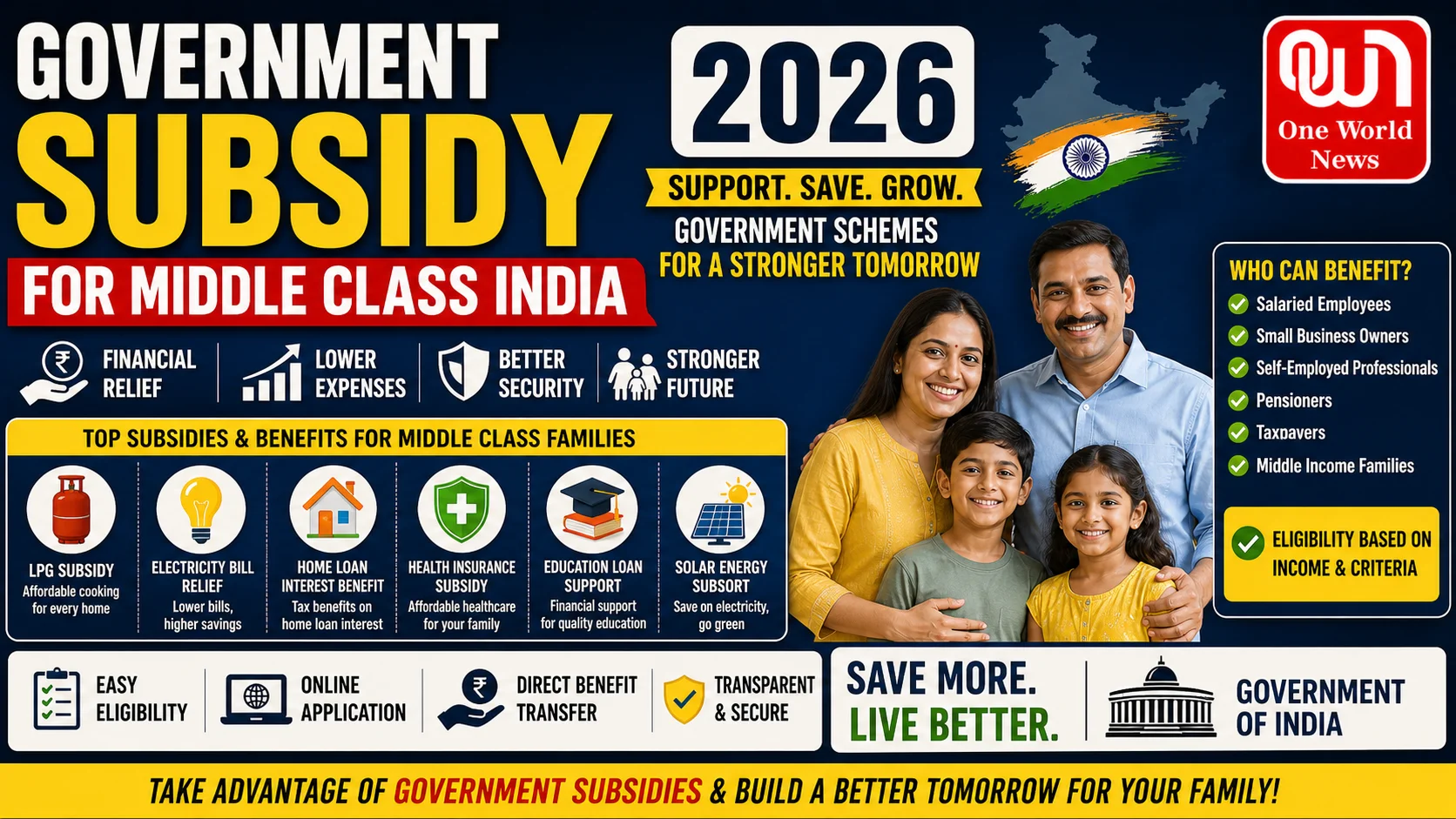
In 2026, the Indian government continues to focus on easing financial pressure on middle-class families through a mix of subsidies, tax reliefs, and welfare schemes. While many subsidies are traditionally targeted at lower-income groups, several programs now extend meaningful benefits to middle-income households—especially in housing, fuel, and financial assistance.
If you belong to the middle class in India, understanding these schemes can help you save significantly on everyday expenses and long-term investments.
1. Housing Subsidy: Biggest Benefit for Middle Class
One of the most impactful government subsidy for middle class India comes through housing schemes like the Pradhan Mantri Awas Yojana (PMAY). This scheme continues to be a major financial support system in 2026.
Under PMAY’s Credit Linked Subsidy Scheme (CLSS), middle-income groups (MIG) can avail interest subsidies on home loans. Eligible buyers can get interest subsidies of up to 6.5% on loans up to ₹6 lakh, reducing EMI burden significantly.
Additionally, the government has reinforced its commitment in Budget 2026 to make housing affordable for middle-income families by promoting subsidised housing loans across urban and rural areas.
This means:
- Lower EMI payments
- Easier access to home ownership
- Increased housing supply in Tier 2 and Tier 3 cities
For many middle-class families, this is the most valuable financial benefit govt schemes offer in 2026.
2. LPG Subsidy Update India: What’s New in 2026
The lpg subsidy update india is another important area where households can save money. While LPG subsidies are mainly targeted at economically weaker sections, middle-class families can still benefit indirectly.
Under schemes like Pradhan Mantri Ujjwala Yojana:
- A subsidy of around ₹300 per LPG cylinder continues for eligible beneficiaries.
- The subsidy covers multiple refills annually, helping reduce cooking costs.
However, middle-class households should note:
- High-income individuals may not be eligible for direct LPG subsidies
- Aadhaar-based e-KYC has become mandatory for subsidy eligibility in 2026
Also, the government is reviewing LPG subsidy structures due to global price changes, which may impact future pricing and eligibility.
Even if you don’t receive direct subsidy, LPG pricing stability due to government support indirectly benefits middle-class consumers.
3. Homebuyer Support Funds & Real Estate Relief
In addition to PMAY, the government is introducing new financial mechanisms to support middle-class homebuyers. Initiatives like SWAMIH-type funds aim to:
- Complete stalled housing projects
- Protect middle-class investments
- Ensure timely possession of homes
This reduces financial stress for buyers stuck in delayed real estate projects and strengthens confidence in the housing sector.
4. Tax and Financial Benefits Govt Schemes
Beyond direct subsidies, the government offers several indirect financial benefits govt schemes that support the middle class:
a) Tax Rebates & Deductions
- Increased standard deductions
- Home loan interest deductions under Section 24
- Principal repayment benefits under Section 80C
These reduce overall tax liability and improve disposable income.
b) Savings & Investment Schemes
Government-backed schemes like:
- Public Provident Fund (PPF)
- National Savings Certificate (NSC)
- Sukanya Samriddhi Yojana
offer safe investment options with tax benefits, making them ideal for middle-class families.
5. Utility Subsidies & State-Level Benefits
Apart from central schemes, several state governments (including Tamil Nadu and others) are offering:
- Electricity subsidies
- Cooking energy alternatives
- Local welfare schemes
These benefits may not always be labeled as “middle-class subsidies,” but they reduce overall household expenses.
Read More: 5 Fiction Books You Can Read to Escape Stress
6. Who Actually Qualifies as Middle Class?
Eligibility for subsidies often depends on income categories:
- MIG-I: ₹6–12 lakh annual income
- MIG-II: ₹12–18 lakh annual income
These categories are crucial when applying for housing subsidy scheme details and other benefits.
Final Thoughts
The idea that subsidies are only for low-income groups is outdated. In 2026, the government subsidy for middle class India is more structured and impactful than ever—especially in housing and financial planning.
Key takeaways:
- Housing subsidies remain the biggest advantage
- LPG subsidies are evolving but still impactful
- Tax benefits and savings schemes play a major role
- State-level subsidies add extra savings
If you strategically use these schemes, you can reduce financial stress and build long-term stability.
We’re now on WhatsApp. Click to join.
Like this post?
Register at One World News to never miss out on videos, celeb interviews, and best reads.