Vinayak Damodar Savarkar Anniversary 2026: Life and Legacy
Vinayak Damodar Savarkar anniversary 2026 commemorates the birth and impact of a key nationalist thinker, revolutionary, politician, and controversial figure in India’s history.

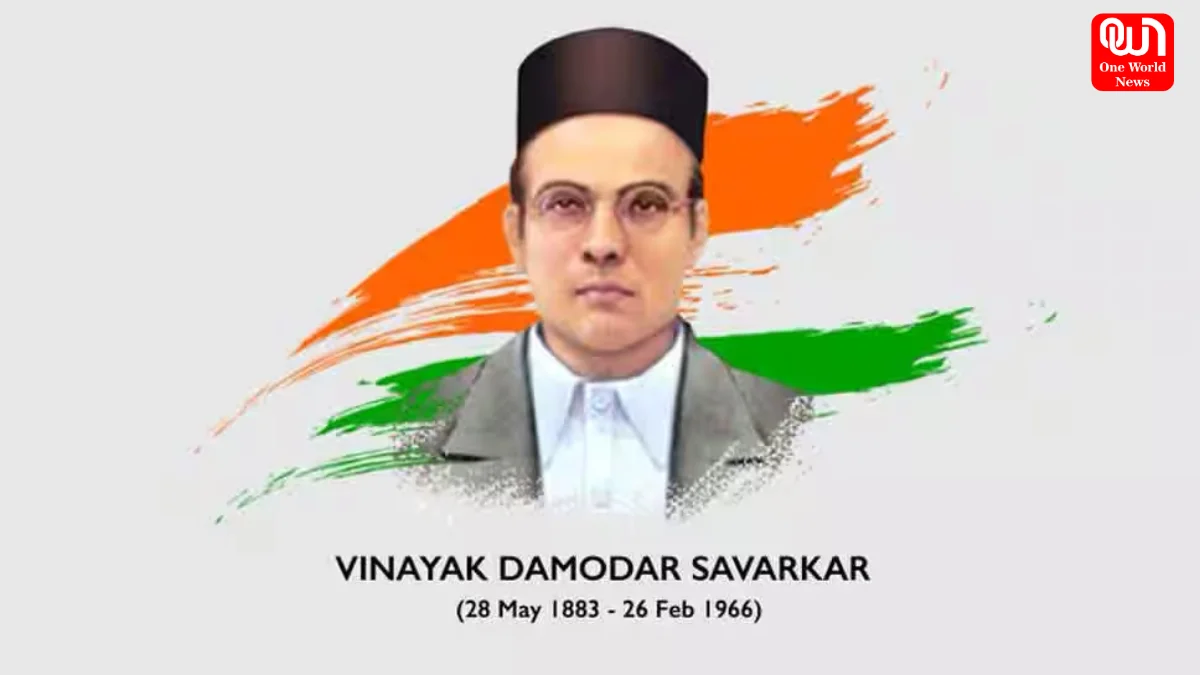
Vinayak Damodar Savarkar Anniversary 2026: Remembering the Life, Legacy, and Controversial Contributions
Each year on May 28, people across India and beyond observe the Vinayak Damodar Savarkar anniversary, commemorating the birth of one of the most influential and debated figures in modern Indian history. Savarkar was a revolutionary thinker, activist, politician, and writer whose ideas have shaped political discourse and nationalist ideology for generations.
Born on May 28, 1883, in the village of Bhagur near Nashik in present-day Maharashtra, Savarkar grew up in a family that valued education and cultural pride. From his early years, he showed intellectual curiosity and a deep passion for India’s independence movement.
Read more: Sitharaman Cites Elon Musk Post, Slams Opposition on India’s GDP Role
Early Life and Revolutionary Beginnings
Savarkar’s political journey began during his school and college days. As a young student at Fergusson College in Pune, he became actively involved in nationalist activities that opposed British colonial rule. Alongside his brother Ganesh Damodar Savarkar, he helped found a secret society known as the Abhinav Bharat Society, aimed at fostering revolutionary activism among Indians.
In 1906, Savarkar traveled to London to study law but also became involved with nationalist groups such as the Free India Society and India House, where he connected with other Indian revolutionaries and sharpened his political ideas. During this period, he wrote The Indian War of Independence (1909) — a history of the 1857 revolt framed as a nationalist uprising rather than a mere mutiny — which was banned by British authorities for its fiery content.
Arrest, Imprisonment, and Ideological Development
Savarkar’s underground political activities drew the attention of British colonial authorities. In 1910, he was arrested in London and subsequently tried and convicted in India for his involvement in nationalist activities. Sentenced to 50 years of imprisonment, he was transported to the notorious Cellular Jail in the Andaman and Nicobar Islands.
During his incarceration and later detention in Ratnagiri, Savarkar continued to write and refine his thoughts. It was during this period that he developed a political philosophy that would later be known as Hindutva, a concept defining Indian identity in cultural and national terms rooted in Hindu heritage. After his release from penal captivity and restrictions in the 1920s and 1930s, Savarkar became a leading figure in the Hindu Mahasabha, where he advocated for Hindu unity and political organization.
Political Career and Contributions
After returning from prison, Savarkar’s political career expanded beyond activism into leadership roles. He served as President of the Hindu Mahasabha, during which time he emphasized the importance of cultural unity and a strong national identity. His ideas on Hindutva significantly influenced right-leaning political thought in India and helped shape the ideological foundations of organizations aligned with Hindu nationalist principles.
Though a fervent advocate of India’s independence, Savarkar’s pathways diverged from the mainstream non-violent movement led by figures such as Mahatma Gandhi. At times, he opposed certain strategies of the Indian National Congress, preferring different approaches to securing political objectives.
Writing and Intellectual Legacy
Savarkar was also a prolific writer and thinker. Beyond The Indian War of Independence, his works included writings on culture, history, and political identity. His articulation of Hindutva sought to unite people under a shared cultural banner and emphasized pride in indigenous heritage. While controversial to some, these writings have left a lasting imprint on political discourse in India.
Controversies Surrounding His Legacy
The legacy of Vinayak Damodar Savarkar is complex and often contested. While revered by many for his fearless nationalism and intellectual contributions, critics point to his ideological positions and political stances that have sparked debate. His leadership in the Hindu Mahasabha and articulation of Hindutva have been sources of both support and controversy in Indian political history.
Savarkar was also implicated in legal proceedings related to the assassination of Mahatma Gandhi in 1948; however, he was acquitted due to lack of evidence. This episode remains one of the many facets of his multifaceted and debated historical footprint.
Commemorating the Anniversary
Every year on May 28, his birth anniversary is observed in various parts of India. Known to many as Veer Savarkar, the day is marked by tributes, speeches, and reflections on his life and contributions. Officials, scholars, and communities often hold events to remember his role in the independence movement and his intellectual impact on modern political thought.
Read more: US Trade Deal: India Gains Edge With 18% Tariff Over Pakistan, China, Bangladesh
Legacy in Modern Times
The Vinayak Damodar Savarkar anniversary 2026 not only honors the memory of a revolutionary but also invites reflection on the complexities of India’s struggle for freedom and the ideological debates that have shaped its political landscape. His life exemplifies a blend of youthful radicalism, intellectual ambition, and political engagement that continues to fuel discussions about identity, nationalism, and history.
Whether celebrated for his courage, critiqued for his views, or studied for his writings, Savarkar’s life remains integral to understanding India’s journey toward independence and the diverse ideas that defined it.
We’re now on WhatsApp. Click to join.
Like this post?
Register at One World News to never miss out on videos, celeb interviews, and best reads.