Mahendravarman I: India’s Forgotten Scholar King of Stone and Thought
Mahendravarman I was a visionary king, poet, and architect who transformed power into philosophy and carved ideas into stone.

Mahendravarman I: The Philosopher King Who Carved Ideas, Art, and Wisdom Into Stone
History often celebrates kings who expanded empires through war, but rarely pauses to remember those who expanded minds. Among India’s most overlooked visionaries stands Mahendravarman I, a ruler who believed that ideas could be more enduring than armies and that stone could speak philosophy.
Mahendravarman ruled the Pallava dynasty during the 7th century, an era when power was measured by conquest and dominance. Yet he chose a different path. Instead of relying solely on the sword, he wielded intellect, creativity, and curiosity as his tools of rule. His reign marked a turning point where governance, art, and thought merged into a single vision.
A King Who Chose the Mind Over the Sword
Mahendravarman lived in a time when kingdoms were locked in constant rivalry. Military strength defined authority. But unlike many of his contemporaries, Mahendravarman understood that cultural legacy could outlive political victories. He invested not just in defense, but in expression.
He was not trained as an architect, yet he pioneered a revolutionary architectural movement. He was not born into poetic tradition, yet his literary works reveal sharp wit and intellectual depth. Mahendravarman was not merely a ruler — he was a thinker who happened to be a king.
Read more: Political Roundup: Major Global Developments on December 30, 2025
Inventing a New Language of Architecture
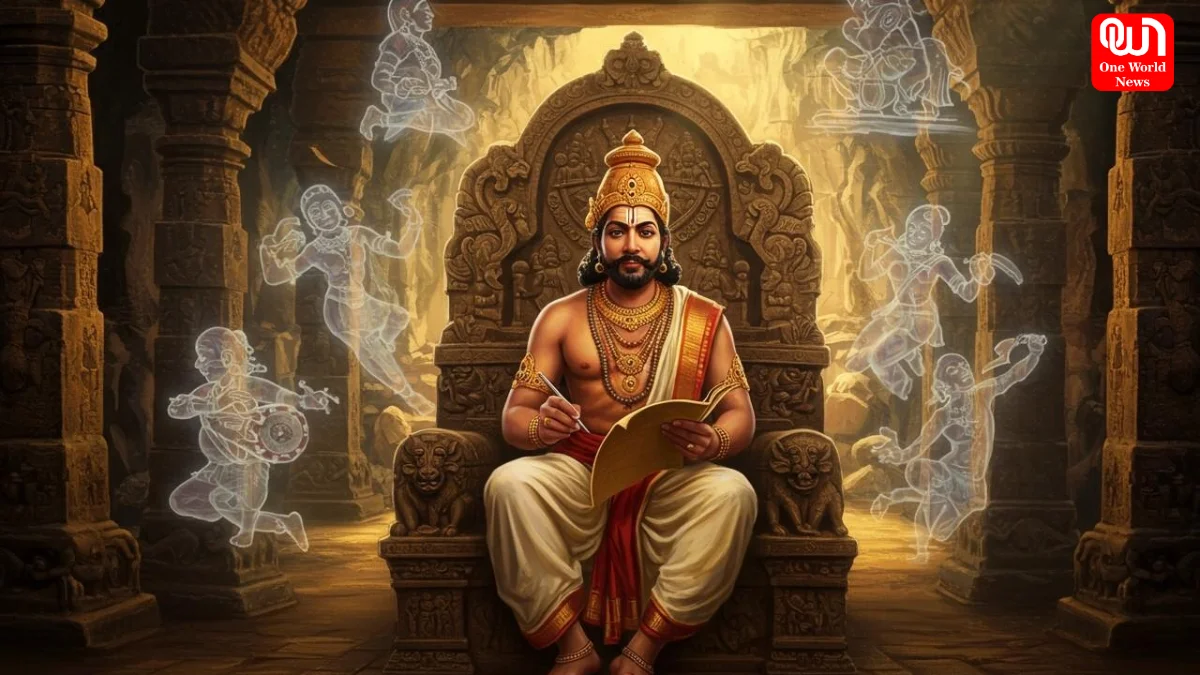
Before towering stone temples dominated South India, Mahendravarman looked to nature itself. Instead of building upward, he carved inward. Mountains became sanctuaries. Rocks became scriptures.
The rock-cut caves associated with his reign represent a bold architectural experiment. These structures were created without bricks, wood, or mortar. What held them together was vision. They reflected a belief that permanence could be achieved through simplicity and imagination.
These caves were not just religious spaces; they were philosophical statements. They declared that faith could exist without grandeur, and devotion without excess.
The Poet Who Ruled a Kingdom
Mahendravarman’s intellectual curiosity extended beyond architecture into literature. He was a gifted writer in both Sanskrit and Tamil, known for his satire, humor, and sharp observation of society. His works reveal a ruler who questioned tradition even while governing within it.
This literary output is significant because it shows a king willing to laugh, critique, and reflect — qualities rarely associated with absolute power. His writings humanize him, presenting a ruler deeply engaged with the cultural life of his people.
Faith as Philosophy, Not Dogma
A major transformation in Mahendravarman’s life was his embrace of Shaivism. But this shift was not merely religious; it was philosophical. His inscriptions do not read like rigid declarations of belief. Instead, they feel personal, thoughtful, and introspective.
For Mahendravarman, faith was a journey rather than a destination. He used art and architecture to explore ideas about devotion, identity, and meaning. His monuments were not only places of worship — they were conversations carved into stone.
Why History Overlooked Him
History tends to favor drama over depth. Battles are easier to remember than ideas. Expansion is louder than introspection. As a result, Mahendravarman I slowly faded from mainstream historical narratives, overshadowed by rulers known primarily for military exploits.
Yet his influence endured quietly. The architectural traditions he initiated shaped generations. The intellectual tone he set influenced successors. His ideas survived, even when his name did not.
A Legacy That Still Speaks
Every carved cave attributed to Mahendravarman carries a question. Every unfinished stone reflects curiosity. His legacy is not found in conquered territories, but in enduring thought.
Mahendravarman reminds us that true power is not measured by how much land a ruler controls, but by how deeply their ideas endure. He shows that leadership rooted in creativity and reflection can leave marks stronger than force.
Read more: Bangladesh First Woman Prime Minister Khaleda Zia Dies at 80
Remembering a Thinker First
Today, revisiting the life of Mahendravarman is an act of historical balance. He deserves recognition not just as a ruler of the Pallava dynasty, but as one of India’s earliest examples of intellectual leadership.
Mahendravarman was a king who carved wisdom instead of fear, who built ideas instead of monuments alone, and who proved that the greatest empires are built in the mind.
Remembering him is not nostalgia — it is restoration.
We’re now on WhatsApp. Click to join.
Like this post?
Register at One World News to never miss out on videos, celeb interviews, and best reads.