Bulleh Shah: The Saint Who Challenged Religion and Chose Humanity
Bulleh Shah was a Sufi poet who questioned religion, caste, and identity, choosing love, truth, and humanity over fear and orthodoxy.

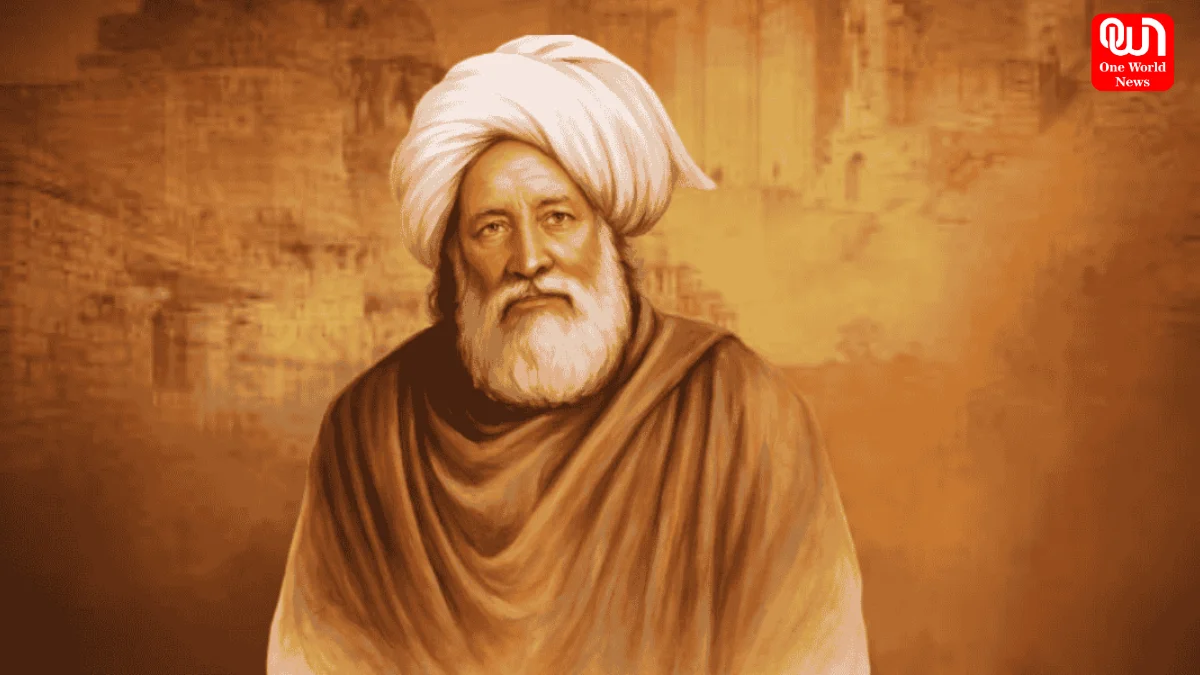
Bulleh Shah: The Sufi Poet Who Ruled Hearts Without a Throne and Redefined Faith Through Love
History often remembers kings by their crowns, but it forgets saints who ruled hearts without thrones.
Among those saints stands Bulleh Shah, a voice that dared to question God, society, and the self. Though time tried to silence him, truth never let his words fade.
Born in 1680 in the land of Punjab, Bulleh Shah was not a rebel with weapons. He was a rebel with language, thought, and fearless honesty. At a time when religion was rigid, caste was unquestioned, and devotion followed strict rules, he chose a different path — one rooted in love and self-realisation.
Read more: Political Roundup: Key Political Developments Shaping India and the World
A Poet Born Into Boundaries
Bulleh Shah lived in a deeply divided society where faith determined identity and caste decided worth. Religious authority dictated how people prayed, lived, and even thought. Questioning these structures was seen as dangerous, even sinful.
But Bulleh Shah refused to bow to imposed definitions. He asked questions that unsettled the powerful and disturbed the comfortable.
Who is Hindu? Who is Muslim?
If God lives only in temples and mosques, then who lives in the human heart?
These questions were not meant to provoke outrage — they were meant to awaken conscience.
Exile for Truth
For his refusal to conform, Bulleh Shah paid a heavy price. Religious leaders of his time boycotted him. He was excommunicated and declared an outcast. Doors of acceptance were closed to him, and his spiritual authority was denied by institutions that feared his influence.
Yet Bulleh Shah did not respond with bitterness.
He chose love over labels.
Truth over tradition.
Humanity over hierarchy.
A Faith Beyond Rituals
Bulleh Shah did not preach religion in the conventional sense. He preached self-realisation. His philosophy rejected empty rituals and blind obedience. Instead, he urged people to look inward — to confront ego, illusion, and fear.
He danced when society demanded silence.
He sang when orthodoxy demanded obedience.
To him, devotion was not found in strict rules but in inner awakening. His poetry spoke of surrender — not to institutions, but to truth.
“Bulleya, Ki Jaana Main Kaun”
One of Bulleh Shah’s most powerful verses continues to echo across centuries:
“Bulleya, ki jaana main kaun…”
(Bulleh, I do not know who I am.)
This was not a statement of confusion, but of enlightenment. It reflected the idea that true wisdom begins when the ego dissolves and identity loses its grip.
In a world obsessed with defining itself, Bulleh Shah chose to dissolve definitions.
Choosing Humanity Over Identity
Bulleh Shah’s message feels strikingly modern. In an age divided by religion, nationality, and ideology, his poetry reminds us that identity is temporary, but humanity is eternal.
Where society chose division, he chose compassion.
Where power demanded conformity, he chose fearless expression.
Where fear ruled, he chose love.
His words crossed religious boundaries and spoke directly to the human soul.
A Legacy Ignored, Yet Alive
Bulleh Shah passed away in 1757, but death could not silence him. His poetry continues to live through songs, folk traditions, and movements of thought. His verses are sung, whispered, and rediscovered by each generation seeking meaning beyond dogma.
Yet formal history often reduced him to footnotes — not because he lacked greatness, but because he challenged power.
Read more: China Rejects US Report, Calls Border Situation With India Stable
Why Bulleh Shah Still Matters
Bulleh Shah was not meant to be remembered quietly.
He was meant to be felt.
His life stands as a reminder that the most dangerous ideas are not violent ones — but truthful ones. He teaches us that love can be revolutionary, and questioning can be sacred.
Remembering Bulleh Shah is not an act of nostalgia.
It is an act of courage.
Because history is incomplete until voices like his are heard again — loud, fearless, and free.
We’re now on WhatsApp. Click to join.
Like this post?
Register at One World News to never miss out on videos, celeb interviews, and best reads.